

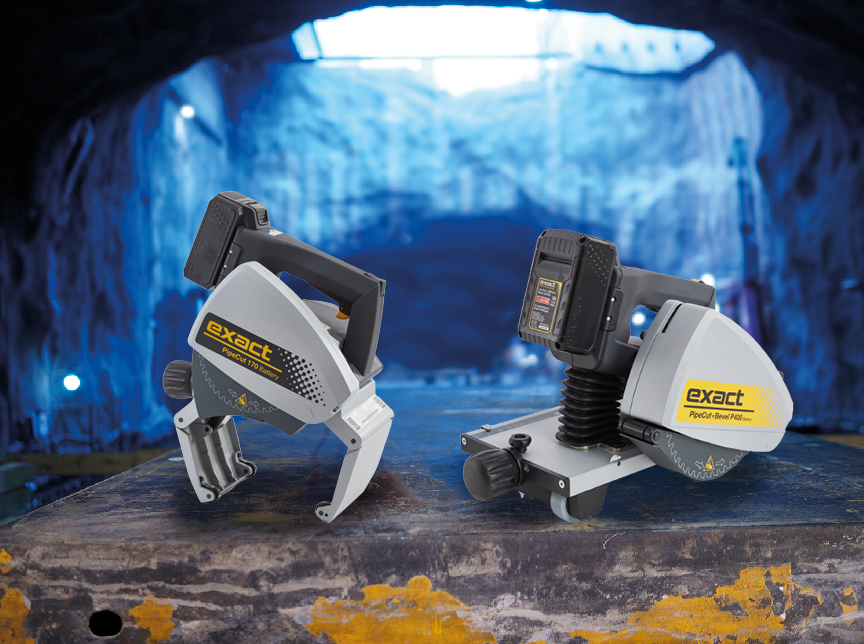
Welding professionals understand that the foundation of any strong joint lies in proper preparation. When cutting pipe for welding projects, the quality of that initial cut determines whether your weld will hold under pressure or fail when it matters most. Professional pipe cutting ensures clean, precise edges that create optimal conditions for strong, reliable welds.
Poor pipe-cutting techniques create costly problems, including material waste, project delays, and structural failures. Understanding proper pipe-cutting requirements, selecting the right tools, and following established techniques can dramatically improve welding outcomes. Explore advanced pipe-cutting solutions designed specifically for welding preparation needs.
This guide examines how pipe-cutting quality directly impacts welding success, covers essential cutting requirements, compares professional cutting methods, and provides practical guidance for achieving consistent results across different materials and project scales.
How poor pipe cutting affects welding quality and project outcomes
Improper pipe cutting creates a cascade of problems that compromise weld integrity from the start. When pipes aren’t cut perpendicular to their axis, misalignment issues prevent proper fit-up between the pieces being joined. These gaps require excessive filler material to bridge, creating weak points that concentrate stress and increase the risk of failure under operational loads.
Rough or uneven cut surfaces prevent complete penetration during welding. Irregular edges can trap air pockets and contaminants, leading to porosity and inclusion defects within the weld metal. Professional welders recognise that even minor surface irregularities can cause incomplete fusion between the base metal and the weld metal.
Common cutting defects that impact welding quality include:
- Bevelled cuts that create uneven wall thickness
- Rough edges requiring extensive grinding and preparation
- Dimensional inaccuracies affecting pipe alignment
- Heat-affected zones from flame cutting that alter material properties
- Burrs and deformation that prevent proper joint assembly
These defects lead to measurable project impacts, including material waste from rework, extended labour hours for remedial work, and potential structural failures requiring complete joint replacement. Quality pipe cutting eliminates these risks whilst reducing overall project costs.
Essential pipe cutting requirements for successful welding preparation
Successful welding preparation demands precise cutting specifications that vary by material type and application requirements. All cuts must be perpendicular to the pipe axis within tolerance limits, typically ±2 degrees for structural applications. The cut surface should exhibit uniform smoothness, without tool marks, tears, or thermal damage that could affect weld penetration.
Different materials require specific cutting considerations for optimal welding preparation:
- Steel pipes: Require clean cuts without heat-affected zones that alter metallurgical properties
- Stainless steel: Demands contamination-free cutting to prevent carbide precipitation and corrosion issues
- Aluminium: Needs precise cuts without work hardening or oxide-layer formation
- Cast iron: Requires controlled cutting to prevent cracking from thermal stress
Edge-preparation standards specify maximum surface-roughness values and dimensional tolerances. Professional pipe-cutting tools maintain these standards consistently, ensuring each cut meets welding preparation requirements without additional finishing operations.
Wall-thickness uniformity at the cut location prevents uneven heat distribution during welding. Proper cutting techniques preserve the pipe’s structural integrity whilst creating optimal conditions for joint formation and stress distribution across the completed weld.
Professional pipe cutting tools and techniques for welding projects
Mechanical pipe saws deliver superior cut quality compared to traditional methods such as angle grinders or flame cutting. These precision tools produce smooth, perpendicular cuts without heat-affected zones, eliminating the thermal distortion that compromises welding preparation. Cold cutting processes preserve material properties whilst creating clean edges ready for immediate welding.
Professional pipe-cutting techniques offer distinct advantages for welding applications. Mechanical saws provide consistent results across different materials, maintaining dimensional accuracy and surface-finish requirements. The controlled cutting action eliminates sparks and fire hazards, making these tools suitable for use in confined spaces and around combustible materials.
Here are three professional pipe-cutting solutions designed for welding preparation:
PipeCut P400 System
| Pipe Size Range | 50 mm–400 mm |
| Materials | PE, PP, PVC plastic pipes |
| Key Feature | Cut and bevel in one process with a 15-degree bevel |
| Weight | 6.0 kg |
PipeBevel 220E System
| Pipe Size Range | 25 mm–220 mm |
| Materials | Steel and stainless steel |
| Key Feature | Portable bevelling with 30°, 37.5°, and 45° angles |
| Wall Thickness | Up to 10 mm |
PipeBevel 360E System
| Pipe Size Range | 110 mm–360 mm |
| Materials | Steel and stainless steel |
| Key Feature | Large-diameter bevelling with consistent results |
| Wall Thickness | Up to 10 mm |
These professional systems eliminate the variability associated with manual cutting methods, ensuring consistent welding preparation across entire projects. Their precision cutting and bevelling capabilities reduce preparation time whilst improving joint quality.
How Exact Tools supports welding professionals with advanced pipe cutting solutions
With over twenty years of expertise in pipe-cutting technology, we specialise in developing solutions that address the specific challenges welding professionals face in pipe preparation. Our award-winning PipeCut series delivers cutting speeds up to 10 times faster than traditional methods whilst maintaining the precision required for quality welding preparation.
Our comprehensive approach to welding preparation includes:
- Cold cutting processes that eliminate heat-affected zones
- Precision cutting and bevelling systems for various pipe materials
- Portable designs suitable for on-site welding applications
- ISO 9001, ISO 14001, and ISO 45001 certifications ensuring quality and safety standards
We serve professional contractors across construction, plumbing, and industrial sectors with solutions designed specifically for welding applications. Our products cut through steel, plastic, copper, aluminium, cast iron, stainless steel, and multi-layer pipes, producing smooth, straight cuts ready for joining without additional preparation.
The 85% lower power consumption compared to angle grinders, combined with spark-free operation, makes our tools ideal for welding environments where safety and precision are paramount. Contact our team to discuss your specific welding preparation requirements and find the optimal pipe-cutting solution for your projects.