

Welding projects often face unexpected delays that can derail timelines and inflate costs. The culprit? Poor pipe-cutting preparation that creates hours of additional work before the first weld can begin. Professional pipe-cutting techniques can transform project efficiency, reducing preparation time from hours to minutes while ensuring consistent, high-quality results.
Modern pipe-cutting technology delivers precise, clean cuts that eliminate extensive grinding, filing, and rework. By understanding how proper pipe cutting affects welding preparation time, contractors can make informed decisions about equipment and methods that dramatically improve project timelines. Discover professional pipe-cutting solutions that can transform your welding project efficiency.
This comprehensive guide examines the time-saving benefits of professional pipe cutting, compares different cutting methods, and explains how modern technology addresses the most common preparation challenges in welding projects.
Why Poor Pipe-Cutting Preparation Costs Welding Projects Hours
Inadequate pipe cutting creates a cascade of problems that significantly extend welding project timelines. Uneven cuts force welders to spend additional time grinding and filing pipe ends to achieve proper fit-up, often adding 15–30 minutes per joint, depending on the severity of the cutting errors.
Burrs and rough edges from improper cutting methods require extensive cleanup before welding can begin. These imperfections prevent proper pipe alignment and can cause incomplete penetration or contamination in the weld joint. The time spent removing burrs with hand tools or grinders typically doubles the preparation time compared to starting with clean, professional cuts.
Improper bevelling represents another significant time drain in welding preparation. When pipe ends lack the correct bevel angle or have inconsistent bevelling, welders must manually correct these issues using angle grinders or bevelling tools. This rework process can add 20–45 minutes per joint, particularly on larger-diameter pipes, where achieving consistent angles becomes increasingly challenging.
Heat-affected zones from cutting methods that generate excessive heat create additional complications. These zones can cause material hardening or distortion, requiring cooling time between cuts and potentially necessitating heat treatment before welding. The cumulative effect of these preparation issues can extend project timelines by 25–40% beyond original estimates.
How Professional Pipe Cutting Reduces Welding Preparation Time
Clean, precise cuts from professional pipe-cutting equipment eliminate most pre-welding preparation work. When pipes are cut using proper techniques, the resulting ends require minimal additional preparation, reducing typical grinding and filing time from 30–45 minutes per joint to just 5–10 minutes for final inspection and light cleanup.
Professional pipe-cutting methods create weld-ready pipe ends through controlled cutting processes that maintain consistent wall thickness and square cuts. These precise cuts ensure proper fit-up between pipe sections, eliminating gaps that would otherwise require extensive preparation or filler-material adjustments during welding.
Cold-cutting processes used in professional pipe saws prevent the heat-affected zones that plague traditional cutting methods. Without heat distortion, pipes maintain their structural integrity and dimensional accuracy, allowing welders to proceed immediately without cooling periods or corrective grinding. This advantage alone can save 10–15 minutes per cut on larger-diameter pipes.
Integrated bevelling capabilities in modern pipe-cutting equipment further streamline preparation by creating proper bevel angles during the cutting process. This simultaneous cutting-and-bevelling approach reduces preparation time from separate operations that might take 45–60 minutes combined to a single 10–15-minute process.
Time-Saving Benefits of Modern Pipe-Cutting Blade Technology
Advanced pipe-cutting blade materials and designs deliver significantly faster cutting speeds than traditional methods. Tungsten carbide-tipped (TCT) blades maintain sharp cutting edges longer and cut through various pipe materials more efficiently, reducing cutting time by up to 70% compared to standard steel blades.
Modern blade geometry optimises chip removal and reduces cutting friction, allowing smoother operation and cleaner cuts. These design improvements translate to faster cutting speeds while maintaining cut quality, with professional-grade blades capable of cutting through 100 mm steel pipe in under 2 minutes, compared to 8–10 minutes with conventional methods.
Cold-cutting blade technology eliminates sparks and excessive heat generation, removing safety delays and cooling requirements between cuts. This advancement allows continuous operation without fire-watch protocols or cooling periods, improving overall project efficiency by maintaining a consistent workflow throughout the cutting process.
Extended blade life from advanced materials reduces downtime for blade changes during large projects. Professional cutting blades can complete hundreds of cuts before requiring replacement, compared to traditional methods that may require blade changes every 20–30 cuts, saving valuable time and maintaining project momentum.
Comparing Cutting Methods for Welding Project Efficiency
Manual hacksaws represent the slowest pipe-cutting method, typically requiring 15–25 minutes for a single cut on 100 mm steel pipe. While this method produces relatively clean cuts, the time investment makes it impractical for projects with multiple joints or tight deadlines. The physical effort required also leads to inconsistent cut quality as operator fatigue increases.
Angle grinders offer faster cutting speeds, completing similar cuts in 3–5 minutes, but generate significant heat and sparks that create safety concerns and heat-affected zones. The rough cuts produced by angle grinders require extensive cleanup, often negating the initial time savings through increased preparation work. Fire-safety protocols when using angle grinders can add 10–15 minutes per cut in sensitive environments.
Professional pipe saws deliver optimal efficiency by combining fast cutting speeds with clean, precise results. These machines typically complete 100 mm steel pipe cuts in 1–2 minutes while producing weld-ready ends that require minimal preparation. The cold-cutting process eliminates safety delays and heat-related issues, maintaining consistent productivity throughout the project.
Total project time analysis shows that professional pipe-cutting methods can reduce overall welding project duration by 30–50% compared to traditional cutting approaches. This improvement stems from faster cutting speeds, reduced preparation time, and the elimination of rework caused by poor initial cuts.
How Exact Tools Helps Contractors Save Time on Pipe-Cutting Projects
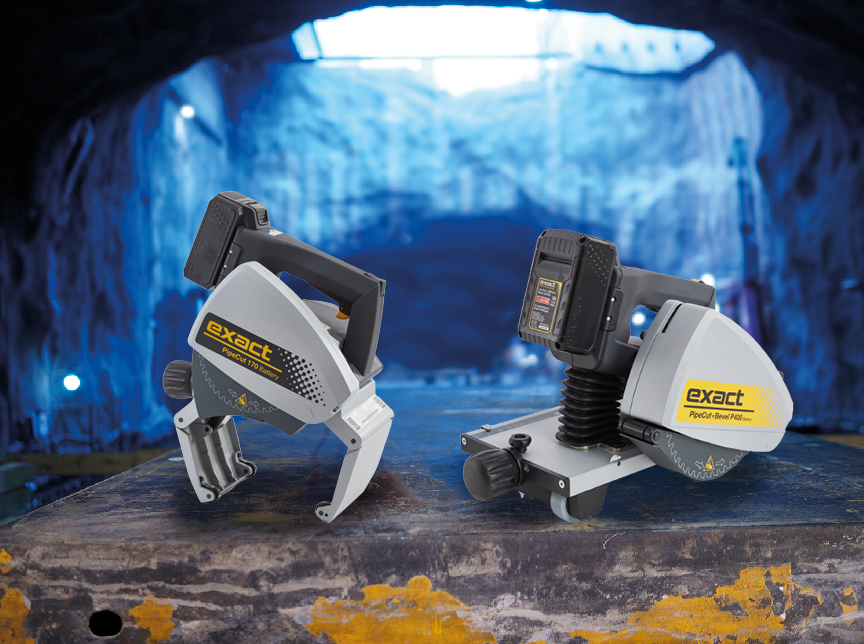
We specialise in revolutionary pipe-cutting solutions that deliver cutting speeds up to 10 times faster than traditional methods. Our PipeCut series of portable pipe saws cuts through steel, plastic, copper, aluminium, cast iron, stainless steel, and multilayer pipes, producing smooth, straight cuts ready for immediate joining.
Our cold-cutting technology eliminates sparks and heat-affected zones while consuming 85% less power than angle grinders. This approach removes fire-safety delays and cooling requirements, allowing continuous operation that maintains project momentum. The lightweight, portable design enables easy on-site operation without compromising cutting precision or safety standards.
Professional contractors report significant time savings using our equipment across various project types:
- Plumbing installations completed 40% faster through reduced preparation time
- Industrial pipe-fitting projects shortened by 35% due to precise, weld-ready cuts
- Construction projects benefiting from continuous operation without fire-watch protocols
Featured Exact Tools Pipe-Cutting Solutions
| Product | Pipe Materials | Pipe Size Range | Key Features |
|---|---|---|---|
| PipeCut P400 | PE, PP, PVC, plastic materials | 50–400 mm diameter | Cut and bevel in one process, 15-degree bevel capability |
| PipeBevel 220E | Steel, stainless steel | 25–220 mm diameter | Multiple bevel angles (30°, 37.5°, 45°), portable design |
| PipeBevel 360E | Steel, stainless steel | 110–360 mm diameter | Heavy-duty bevelling, built-in stopper for consistent results |
Our commitment to quality management, supported by ISO 9001, ISO 14001, and ISO 45001 certifications, ensures consistent performance and reliability. Our award-winning designs, including Red Dot Design Awards for multiple PipeCut models, reflect our focus on user-friendly operation and exceptional results.
Transform your welding project efficiency with professional pipe-cutting technology. Explore our complete range of pipe-cutting solutions or contact our technical team to discuss specific project requirements and discover how much time you can save on your next welding project.