

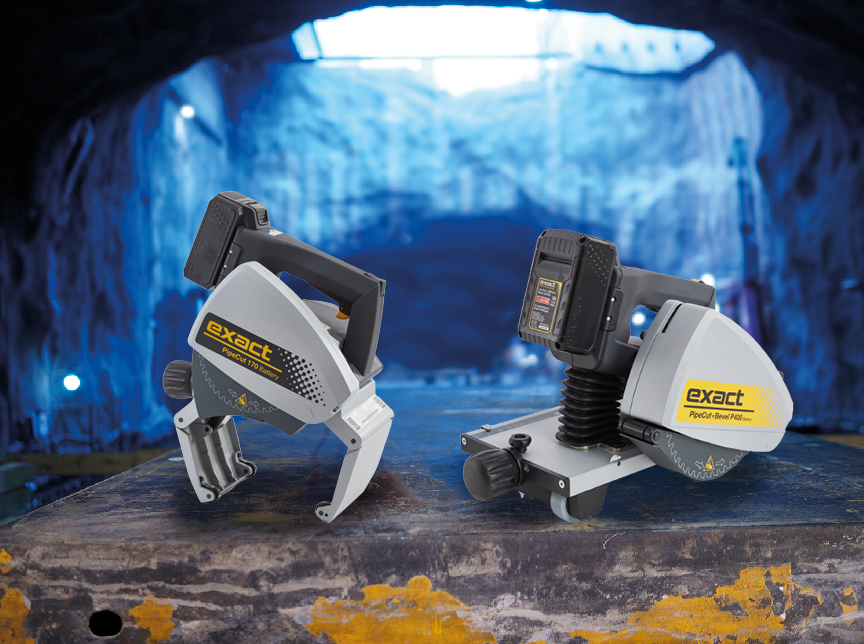
A pipe saw is a specialised cutting tool designed to make precise, clean cuts through various pipe materials, including steel, plastic, copper, aluminium, and stainless steel. Unlike traditional cutting methods, pipe saws deliver significantly faster cutting speeds while producing smooth, straight cuts that are immediately ready for joining. Professional pipe-cutting applications span construction, plumbing, HVAC installation, and industrial maintenance, where precise pipe cutting tools ensure efficient workflows and superior results.
What exactly is a pipe saw, and how does it work?
A pipe saw is a portable, electric-powered cutting machine specifically engineered to cut pipes cleanly and accurately. These specialised tools operate using a rotating blade system that moves around the pipe’s circumference, creating consistent, perpendicular cuts without the sparks, heat, or rough edges associated with conventional cutting methods.
The fundamental operating principle involves mounting the pipe saw around the pipe, securing it in position, and activating the cutting mechanism. The blade assembly travels in a controlled circular motion, maintaining constant pressure and cutting depth throughout the process. This method ensures uniform cuts regardless of the operator’s skill level, making it ideal for professional pipe-cutting applications where consistency matters.
Key components include the main housing unit, cutting blade assembly, pipe support system, and safety features. The motor drives the cutting mechanism at optimal speeds for different materials, while the support system maintains proper alignment throughout the cutting process. Modern pipe saws incorporate safety switches and blade guards to protect operators during use.
Compared with traditional cutting methods such as angle grinders or hacksaws, pipe saws eliminate manual effort and dramatically reduce cutting time. The automated cutting action reduces human error, producing professional-quality results every time. This makes pipe saws indispensable for contractors who require reliable, efficient pipe-cutting solutions.
What materials can you cut with a pipe saw?
Professional pipe saws can cut through a comprehensive range of pipe materials, including steel, plastic, copper, aluminium, cast iron, stainless steel, and multi-layer composite pipes. The versatility of modern pipe-cutting tools makes them suitable for virtually any piping system encountered in construction and industrial applications.
Steel pipes, including mild steel and galvanised varieties, cut cleanly with standard carbide-tipped blades. The cold-cutting process prevents heat distortion and maintains the pipe’s structural integrity. Plastic pipes such as PVC, PE, and PP require specific blade configurations to prevent melting or chipping during the cutting process.
Copper and aluminium pipes present unique challenges due to their softer nature, but dedicated pipe saws handle these materials efficiently without crushing or deforming the pipe walls. Cast iron, despite its hardness and brittleness, cuts smoothly when the proper cutting speeds and blade types are used.
Stainless steel pipes demand specialised cutting approaches due to their work-hardening properties. Professional pipe-cutting equipment manages these challenges through optimised cutting speeds and blade geometries. Multi-layer pipes, commonly used in modern plumbing systems, require careful handling to prevent delamination, which quality pipe saws achieve through controlled cutting pressure.
Material thickness capabilities vary by machine model, with most professional units handling wall thicknesses of up to 25 mm effectively. The key to successful cutting across different materials lies in selecting the appropriate blade types and cutting parameters for each specific application.
What are the main applications where pipe saws are used?
Pipe saws are primarily used in construction projects, plumbing installations, HVAC systems, and industrial maintenance operations. These tools are most valuable where precision, speed, and consistency in pipe cutting directly affect project quality and completion times.
Construction applications include new-build installations, renovation projects, and infrastructure development. Contractors rely on pipe saws to install water supply systems, drainage networks, and gas distribution lines. The ability to make precise cuts quickly allows teams to maintain project schedules while ensuring proper pipe connections.
Plumbing professionals use pipe saws for both residential and commercial installations. Whether installing new systems or performing repairs, the clean cuts produced by pipe saws eliminate the need for additional finishing work. This efficiency is particularly valuable in tight spaces where traditional cutting methods become impractical.
HVAC installation is another major application area, where pipe saws handle refrigerant lines, condensate drains, and ventilation ducting. Precision cuts ensure proper fittings and connections, which are critical for system performance and efficiency. Industrial maintenance operations benefit from portable pipe-cutting solutions for equipment repairs and system modifications.
Shipbuilding, offshore installations, and power generation facilities also rely heavily on professional pipe-cutting equipment. These environments demand tools that can handle various materials and pipe sizes while maintaining safety standards. Emergency repair situations particularly benefit from the speed and reliability that pipe saws provide.
What advantages do pipe saws offer over traditional cutting methods?
Pipe saws deliver cutting speeds up to 10 times faster than traditional methods while consuming significantly less power than angle grinders. The cold-cutting process eliminates sparks and fire hazards, making them safer to use in sensitive environments where hot-work permits would otherwise be required.
Precision is a major advantage over hacksaws and reciprocating saws. Pipe saws produce perfectly perpendicular cuts with smooth edges that require no additional finishing. This eliminates the time-consuming deburring and filing typically needed with conventional cutting methods, improving overall workflow efficiency.
Safety benefits include reduced operator fatigue, lower noise levels, and the elimination of hot metal fragments. The controlled cutting action prevents the kickback and binding issues common with handheld power tools. Operators can work more safely in confined spaces without exposure to sparks or excessive heat.
Power-consumption advantages make pipe saws more environmentally friendly and cost-effective for extended use. The efficient cutting action requires less energy while delivering superior results. This efficiency translates to longer battery life for cordless models and reduced operating costs for mains-powered units.
Consistent quality ensures that every cut meets professional standards regardless of operator experience. Traditional methods rely heavily on individual skill, leading to variable results. Pipe saws standardise the cutting process, ensuring reliable outcomes across different operators and job sites. Explore our range of professional pipe saws to experience these advantages firsthand.
How do you choose the right pipe saw for your specific needs?
Selecting the appropriate pipe saw requires careful consideration of pipe diameter ranges, material compatibility, portability requirements, and power specifications. The right choice depends on your typical applications, work environment, and performance expectations for professional pipe-cutting tasks.
Pipe diameter capacity is the primary selection criterion. Smaller units handle pipes from 50 to 220 mm, while larger models accommodate diameters up to 400 mm or more. Consider both your current needs and potential future requirements when evaluating diameter ranges. Wall thickness capabilities also vary, with most professional units handling up to 25 mm effectively.
Material compatibility affects blade selection and cutting performance. Ensure your chosen pipe saw can handle all the materials you regularly encounter. Some units excel with metals, while others specialise in plastic pipe applications. Multi-material capability provides greater versatility but may require different blade sets.
Portability considerations include weight, carrying cases, and power options. Jobsite work demands lightweight, portable units with robust carrying solutions. Battery-powered models offer maximum mobility but may have limited runtime. Mains-powered units provide consistent performance for workshop applications.
Additional features worth considering include built-in pipe supports, safety systems, and ease of blade changes. Build quality, warranty coverage, and local service support also influence long-term satisfaction with your pipe-cutting investment.
Professional Pipe Cutting Solutions Comparison
| Model | Pipe Diameter Range | Materials | Key Features |
|---|---|---|---|
| PipeCut P400 | 50–400 mm | PE, PP, PVC plastics | Cut and bevel in one process, 15° bevel capability |
| PipeBevel 220E | 25–220 mm | Steel, stainless steel | Professional bevelling, multiple bevel angles |
| PipeBevel 360E | 110–360 mm | Steel, stainless steel | Large-diameter capability, portable design |
How does Exact Tools help professionals with pipe cutting?
We specialise in revolutionary pipe-cutting and finishing solutions, serving professionals across the construction, plumbing, and industrial sectors with award-winning technology developed in Finland. Our comprehensive range addresses every aspect of professional pipe cutting, from portable saws to specialised bevelling equipment.
Our flagship PipeCut series delivers cutting speeds up to 10 times faster than traditional methods while maintaining exceptional precision. These machines handle steel, plastic, copper, aluminium, cast iron, stainless steel, and multi-layer pipes, producing smooth, straight cuts ready for immediate joining. The lightweight, portable design enables efficient on-site operation while meeting stringent safety standards.
Key advantages of our pipe-cutting solutions include:
- 85% lower power consumption compared with angle grinders
- The cold-cutting process eliminates fire hazards and sparks
- Award-winning designs recognised with Red Dot Design Awards
- ISO 9001, ISO 14001, and ISO 45001 certifications ensuring quality and safety
- Comprehensive support through our global service network
We maintain rigorous quality standards through our certified management systems, ensuring every product meets professional requirements for durability, performance, and safety. Our commitment to innovation drives the continuous development of cutting-edge solutions that address real-world challenges faced by pipe-cutting professionals.
Whether you need portable pipe saws for fieldwork, specialised bevelling equipment for welding preparation, or complete cutting solutions for industrial applications, we provide the expertise and technology to enhance your operational efficiency. Contact our team to discuss your specific pipe-cutting requirements and discover how our solutions can improve your project outcomes.