

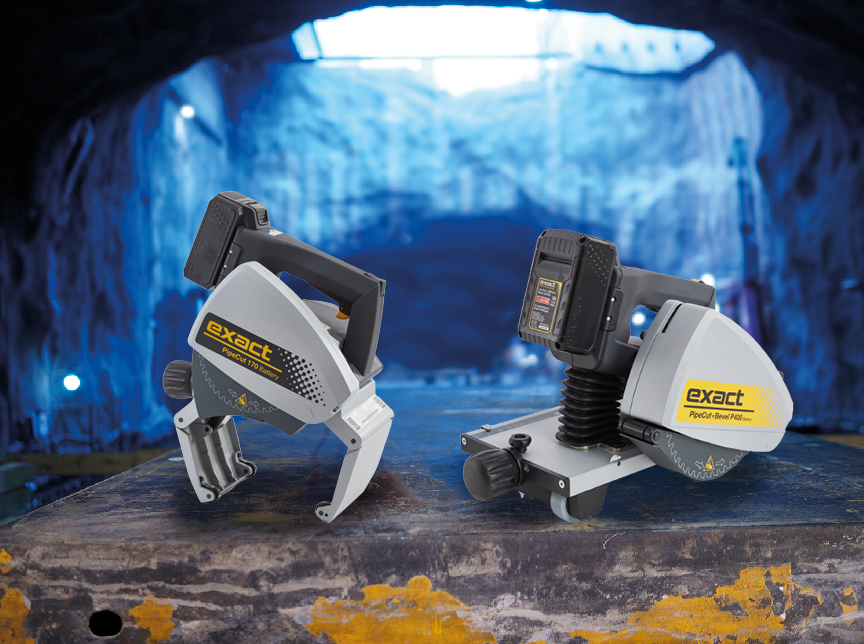
Pipe cutting and pipe beveling are two distinct pipe-preparation processes that serve different purposes in professional piping applications. Pipe cutting creates clean, straight cuts across the pipe diameter for length adjustment, while pipe beveling creates angled edges specifically for weld preparation. Both processes are essential for proper pipe installation, though they address different stages of pipe preparation and require specialised tools for optimal results.
What is pipe cutting, and how does it differ from other cutting methods?
Pipe cutting is the process of creating clean, perpendicular cuts across the pipe diameter to achieve the desired lengths while maintaining precise, straight edges ready for joining. Modern pipe cutting employs cold-cutting technology that eliminates sparks and heat-affected zones, delivering significantly faster results than traditional methods.
Professional pipe saws can cut through steel, plastic, copper, aluminium, cast iron, stainless steel, and multilayer pipes up to 10 times faster than conventional angle grinders. The cold-cutting process produces smooth, burr-free edges that require minimal finishing, reducing overall project time and improving joint quality.
Traditional cutting methods, such as angle grinders, create heat and sparks and often require additional finishing work to achieve proper edge quality. Cold-cutting technology eliminates fire hazards while consuming 85% less power than angle grinders, making it safer and more efficient for on-site operations. The precision of modern pipe cutting ensures consistent results across multiple cuts, which is crucial for professional installations.
What is pipe beveling, and why is it essential for pipe joining?
Pipe beveling creates angled edges on pipe ends to facilitate proper weld penetration and create strong, reliable joints. The beveling process removes material at specific angles, typically 30°, 37.5°, or 45°, depending on pipe specifications and welding requirements.
Proper bevel angles are critical for achieving full weld penetration, which ensures joint strength and prevents failure under pressure or stress. The angled preparation allows welding material to flow properly between pipe sections, creating a continuous bond that maintains the pipe’s structural integrity throughout the joint.
Different industries require specific bevel types based on their applications. Standard bevels work for most general applications, while specialised angles may be necessary for high-pressure systems or specific welding procedures. The consistency of machine-created bevels ensures uniform weld quality across multiple joints, which is essential for system reliability and compliance with industry standards.
What’s the difference between pipe cutting and pipe beveling in terms of process and results?
Pipe cutting creates perpendicular cuts for length adjustment, while pipe beveling creates angled edges for weld preparation. These processes serve complementary but distinct purposes in professional pipe-preparation workflows, each requiring specific tools and techniques.
The cutting process focuses on achieving clean, straight edges across the entire pipe diameter. Results include precise length control and smooth surfaces ready for various joining methods, including threading, flanging, or coupling installation. Cutting typically occurs first in the preparation sequence.
Beveling specifically prepares pipe ends for welding by creating controlled angles that facilitate proper weld penetration. The process removes material at precise angles, creating grooves that accommodate welding material. Professional pipe preparation systems often integrate both capabilities to streamline workflows and ensure consistent results across different preparation requirements.
Which tools are best for pipe cutting versus pipe beveling applications?
Pipe cutting applications require portable pipe saws with cold-cutting technology, while pipe beveling demands specialised beveling machines with adjustable cutting heads. Tool selection depends on material types, pipe sizes, and operational requirements for each specific application.
For pipe cutting, portable saws offer versatility across different materials and sizes. These tools typically feature adjustable clamping systems and interchangeable cutting blades designed for specific materials. Portability enables on-site cutting without requiring pipe transport to fixed cutting stations.
Beveling tools require precise angle control and consistent depth management. Professional beveling machines feature external cutting heads available in standard angles, with options for custom configurations. The cutting heads typically include multiple cutting tips with several edges each, extending tool life and reducing operational costs. Material compatibility ranges from standard steels to stainless steels, with wall-thickness capabilities varying by machine size.
How do you choose between pipe cutting and beveling for your specific project needs?
Project requirements determine whether cutting, beveling, or both processes are necessary. Pipe cutting is essential when length adjustment is required, while beveling becomes necessary for welded joints. Many professional applications require both processes in sequence.
Assessment factors include joint types, pipe specifications, and installation requirements. Threading or mechanical connections typically require only cutting preparation, while welded systems demand both cutting and beveling. Consider material types, wall thickness, and diameter ranges when evaluating tool requirements.
Workflow planning should sequence cutting before beveling to ensure proper edge preparation. Both processes benefit from consistent setup procedures and quality-control measures. Professional installations often integrate both capabilities to maintain efficiency and ensure compliance with industry standards throughout the project lifecycle.
Professional Pipe Preparation Solutions
| Product | Pipe Range | Materials | Key Features |
|---|---|---|---|
| PipeBevel 220E | 25–220 mm diameter | Steel, stainless steel | Portable, 30°/37.5°/45° angles, no sparks |
| PipeBevel 360E | 110–360 mm diameter | Steel, stainless steel | Heavy-duty, built-in stopper, consistent results |
| PipeCut Series | Various sizes available | Steel, plastic, copper, aluminium, cast iron | 10x faster cutting, cold-cutting technology |
How Exact Tools helps professionals with pipe cutting and beveling
We specialise in professional pipe-preparation solutions that address both cutting and beveling requirements for industrial applications. Our PipeCut series delivers revolutionary cold-cutting technology that’s up to 10 times faster than traditional methods, while our PipeBevel systems provide precise angle preparation for welding applications.
Our integrated approach combines cutting and beveling capabilities through complementary product lines. The PipeBevel 220E handles smaller-diameter pipes from 25–220 mm, while the PipeBevel 360E supports larger applications up to 360 mm in diameter. Both systems feature:
- Multiple bevel angle options (30°, 37.5°, 45°)
- Cold-cutting technology that eliminates sparks and fire hazards
- Portable design for on-site operations
- Compatible cutting heads with extended tip life
- User-friendly interfaces that match our pipe saw systems
Our commitment to professional pipe preparation extends beyond equipment to comprehensive support and training. We maintain ISO 9001, ISO 14001, and ISO 45001 certifications, ensuring quality management, environmental responsibility, and occupational safety standards. Contact our team to discuss your specific pipe cutting and beveling requirements and discover how our solutions can improve your project efficiency and results.