

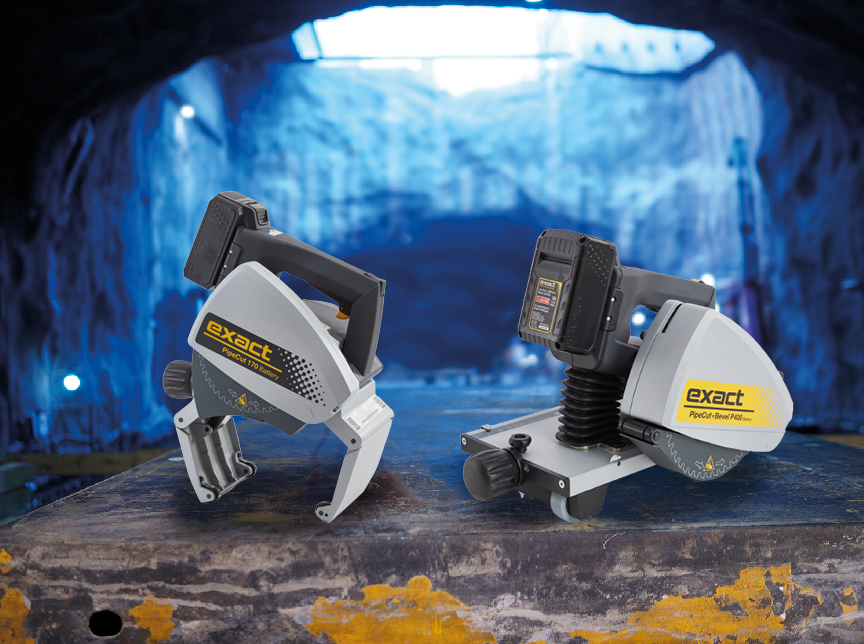
Pipe sawing delivers significantly higher accuracy than traditional cutting methods, producing straight, precise cuts that are immediately ready for joining. Professional pipe saws use controlled cutting mechanics and specialised blades to achieve consistent results across all pipe materials, whilst traditional methods such as angle grinders rely heavily on operator skill and often produce uneven cuts that require additional finishing work.
The precision of pipe cutting directly impacts installation quality, joint integrity, and project efficiency. Explore our range of professional pipe cutting solutions to discover how advanced cutting technology can improve your project outcomes.
What makes pipe sawing more accurate than traditional cutting methods?
Pipe saws achieve superior accuracy through controlled cutting mechanics that reduce operator-dependent variation and maintain consistent blade positioning throughout the cutting process. Unlike handheld tools, pipe saws clamp securely around the pipe and use guided cutting paths that ensure perfectly perpendicular cuts every time.
The precision engineering of pipe cutting blades plays a crucial role in accuracy. These specialised blades feature:
- Tungsten carbide tips designed for specific pipe materials
- Optimised tooth geometry that reduces cutting resistance
- A balanced blade design that minimises vibration during operation
- Precise blade-mounting systems that prevent wobble or deflection
Traditional cutting methods rely on operator steadiness and visual alignment, which introduces human error. Pipe saws reduce these inconsistencies by providing mechanical guidance and a controlled cutting motion that produces consistent results regardless of the operator’s experience level.
The cold-cutting process used by pipe saws also contributes to accuracy by preventing heat distortion that can occur with friction-based cutting methods. This ensures the pipe maintains its original dimensions and structural integrity throughout the cutting process.
How does pipe saw accuracy compare to angle grinder cutting?
Pipe saws consistently produce straight, perpendicular cuts with minimal operator skill requirements, whilst angle grinder cut quality varies significantly depending on operator technique and experience. Professional pipe saws eliminate the hand tremor and alignment issues that commonly affect angle grinder performance.
The stability differences between these tools directly impact cutting precision:
- Pipe saws clamp securely to the pipe, providing a stable cutting platform
- Angle grinders require freehand operation, with the potential for blade wandering
- Pipe saw cutting speed remains constant, preventing rushed or uneven cuts
- Angle grinder cutting speed varies with operator pressure and technique
Tool stability affects accuracy in several ways. Pipe saws maintain a consistent blade angle and cutting depth automatically, whilst angle grinders depend on the operator’s ability to maintain proper positioning. This becomes particularly challenging on larger-diameter pipes, where maintaining a consistent angle becomes increasingly difficult.
The impact of cutting speed on precision also differs significantly. Pipe saws operate at optimal speeds for each material type, whilst angle grinders often run too fast for precise control, leading to rough cuts that require additional finishing work.
Why do pipe saws produce more consistent results across different materials?
Pipe saws maintain cutting accuracy across various materials through adaptive blade technology and consistent cutting mechanics that automatically accommodate material properties. The controlled cutting environment ensures uniform results whether cutting steel, copper, plastic, or stainless steel pipes.
The blade technology designed for pipe saws addresses material-specific cutting requirements:
- Tungsten carbide tips handle hard materials such as steel and stainless steel
- Optimised cutting angles prevent plastic deformation
- Variable tooth configurations accommodate different material densities
- Controlled cutting speeds prevent overheating in heat-sensitive materials
Consistency across materials comes from a mechanical cutting process that maintains constant pressure and speed regardless of material hardness. Traditional methods often require operator adjustments for different materials, introducing variables that affect cut quality.
The cold-cutting mechanism prevents material distortion that can occur with heat-generating cutting methods. This is particularly important for plastic pipes, which can melt or deform, and thin-walled metal pipes, which can distort under excessive heat.
What factors affect the precision of pipe cutting operations?
Cutting precision depends on proper pipe clamping, blade condition, cutting-speed optimisation, and consistent operator technique. Professional installations require attention to each factor to achieve the accuracy needed for reliable pipe connections and leak-free joints.
Pipe clamping is the foundation of accurate cutting:
- Secure the pipe firmly to prevent movement during cutting
- Ensure the pipe is properly aligned before beginning the cut
- Use appropriate supports for longer pipe sections
- Verify that clamping does not deform thin-walled pipes
Blade condition directly impacts cutting quality and accuracy. Sharp blades cut cleanly through materials, whilst dull blades can cause tear-out, rough edges, or blade deflection that affects cut straightness. Regular blade inspection and replacement maintain optimal cutting performance.
Cutting-speed optimisation varies by material type and pipe wall thickness. Operating at incorrect speeds can cause blade binding, material burning, or a poor surface finish. Professional pipe saws typically include speed controls or recommendations for different applications.
Operator technique, even with mechanical guidance systems, affects final results. Proper setup, steady operation, and following manufacturer guidelines ensure consistent accuracy across multiple cuts.
How does cutting accuracy impact pipe joining and installation quality?
Precise cuts ensure proper pipe alignment and create optimal surface contact for reliable joints, reducing leak potential and eliminating the need for additional finishing work. Accurate cuts allow fittings to seat properly and create uniform stress distribution across joint connections.
The relationship between cut quality and joint performance affects several installation aspects:
- Square cuts enable proper fitting engagement and seal contact
- Smooth cut surfaces reduce turbulence and pressure loss
- Consistent pipe-end preparation improves welding quality
- Accurate dimensions ensure proper fitting tolerances
Installation efficiency improves significantly with accurate cuts that eliminate rework. Poor cuts often require additional grinding, filing, or re-cutting, which increases labour time and material waste. Professional installations demand first-time accuracy to maintain project schedules.
Seal quality depends heavily on cut accuracy, particularly for compression fittings and threaded connections. Uneven or angled cuts prevent proper seal engagement, increasing leak risk and compromising system reliability. Contact our technical team for guidance on achieving optimal cutting accuracy for your specific applications.
How does Exact Tools help professionals achieve precise pipe cutting?
We specialise in revolutionary pipe cutting technology that delivers up to 10 times faster cutting speeds than traditional methods whilst maintaining exceptional accuracy. Our Finnish-engineered pipe saws produce smooth, straight cuts ready for immediate joining across steel, plastic, copper, aluminium, cast iron, stainless steel, and multilayer pipes.
Our comprehensive pipe cutting solutions address professional accuracy requirements through:
- Award-winning PipeCut series with Red Dot Design recognition
- Cold-cutting technology that eliminates sparks and fire hazards
- 85% lower power consumption compared with angle grinders
- Lightweight, portable designs for on-site operation
- ISO 9001, ISO 14001, and ISO 45001-certified quality systems
Featured Pipe Cutting Solutions
| Product | Pipe Range | Materials | Key Features |
|---|---|---|---|
| PipeCut P400 | 50-400mm diameter | PE, PP, PVC plastics | Cut and bevel in one process, 15-degree bevel capability |
| PipeBevel 220E | 25-220mm diameter | Steel, stainless steel | Multiple bevel angles, 10mm wall thickness capacity |
| PipeBevel 360E | 110-360mm diameter | Steel, stainless steel | Large-diameter capability, professional bevelling |
Our 20 years of pipe cutting expertise ensure professionals receive reliable, accurate cutting solutions backed by comprehensive technical support. The lightweight design and exceptional safety standards make our tools suitable for demanding jobsite conditions whilst maintaining the precision required for professional installations.
Professional contractors worldwide rely on our innovative technology to achieve consistent, accurate results that eliminate rework and improve installation efficiency. Discover our complete range of precision pipe cutting solutions and experience the accuracy advantage that comes from Finnish engineering excellence.