

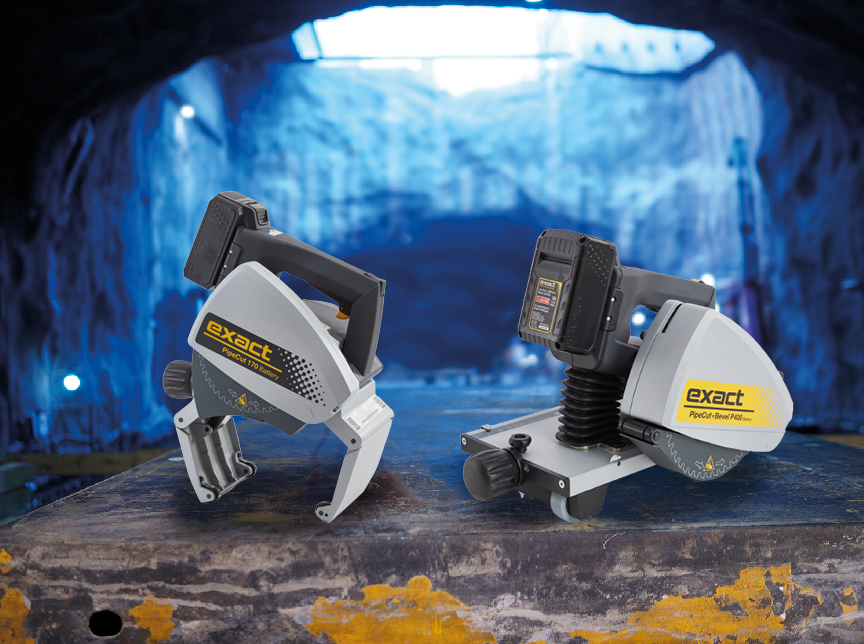
Pipe cutting and plasma cutting serve different purposes in industrial applications. Pipe cutting uses mechanical methods with rotating blades to create precise, cold cuts through various pipe materials, while plasma cutting employs high-temperature ionised gas to thermally cut through metal. The choice between these cutting techniques depends on precision requirements, material types, and project specifications.
Professional contractors need to understand both cutting methods to select the most appropriate technique for their specific applications. Explore our comprehensive range of pipe cutting solutions designed for various industrial cutting needs.
What is the fundamental difference between pipe cutting and plasma cutting?
Pipe cutting operates through mechanical action using rotating cutting blades that physically remove material, creating precise cuts without generating heat. This cold-cutting process maintains material integrity and produces smooth, straight edges ready for immediate joining. The cutting blade moves through the pipe wall in a controlled manner, ensuring dimensional accuracy.
Plasma cutting functions by creating an electrically conductive channel of superheated, ionised gas that reaches temperatures exceeding 20,000°C. This thermal cutting method melts and blows away material, making it effective for thick metal sections but potentially affecting the heat-affected zone around the cut.
The energy sources differ significantly between these methods. Pipe cutting tools require electrical power to drive the motor and rotate the blade, typically consuming 85% less energy than conventional angle grinders. Plasma cutting systems need compressed air and electrical power to generate the plasma arc, resulting in higher overall energy consumption.
Material interaction varies considerably between approaches. Mechanical pipe cutting preserves the original material properties throughout the cutting process, while plasma cutting creates a heat-affected zone that may alter material characteristics near the cut edge.
Which cutting method provides better precision and finish quality?
Pipe cutting delivers superior precision and finish quality for most pipe-cutting applications. The mechanical cutting action produces smooth, perpendicular cuts with minimal material distortion and no heat-affected zones. Cut edges remain dimensionally accurate and require no additional finishing before joining operations.
The controlled blade movement in pipe cutting systems ensures consistent cut quality across different materials, including steel, plastic, copper, aluminium, cast iron, and stainless steel. Variations in wall thickness do not significantly impact cutting precision when appropriate blade specifications are used.
Plasma cutting precision depends on several factors, including material thickness, cutting speed, and equipment quality. Thicker materials generally result in wider kerfs and increased edge bevelling. The thermal nature of plasma cutting can cause slight dimensional changes due to heat expansion and contraction.
Surface finish considerations favour mechanical pipe cutting for applications requiring immediate joining. The cold-cutting process eliminates the need for secondary operations such as grinding or deburring, which plasma cutting often requires to achieve acceptable joint preparation.
How do safety considerations differ between pipe cutting and plasma cutting?
Cold cutting methods eliminate fire hazards entirely, as they produce no sparks, flames, or heat during operation. This makes pipe cutting suitable for use in confined spaces, around flammable materials, and in environments where hot-work permits are difficult to obtain.
Plasma cutting presents significant fire risks due to the high-temperature cutting process and spark generation. Operators must implement comprehensive fire-prevention measures, including fire watches, removal of combustible materials, and appropriate extinguishing equipment. Hot-work permits are typically required in most industrial settings.
Personal protective equipment requirements differ between methods. Pipe cutting operations require standard safety glasses, hearing protection, and work gloves. Plasma cutting demands more extensive protection, including welding helmets with appropriate shade filters, flame-resistant clothing, and respiratory protection due to fume generation.
Ventilation requirements are minimal for mechanical pipe cutting, while plasma cutting necessitates adequate fume-extraction systems to remove potentially harmful cutting fumes and maintain air quality in work areas.
What are the cost implications of pipe cutting versus plasma cutting?
Equipment investment varies significantly between cutting methods. Professional pipe cutting systems represent a moderate initial investment with lower ongoing operating costs. Plasma cutting equipment requires higher capital expenditure for quality systems capable of producing acceptable results across various applications.
Operating expenses favour pipe cutting through reduced energy consumption and minimal consumable costs. Cutting blades have an extended service life and predictable replacement intervals. Plasma cutting involves ongoing costs for consumable electrodes, nozzles, and compressed air or gas supplies.
Project economics often favour pipe cutting for routine pipe installation and maintenance work. The elimination of secondary finishing operations reduces labour costs and project timelines. Fire-watch requirements for plasma cutting add labour expenses and scheduling complexity.
Long-term cost analysis should consider productivity factors, including setup time, cutting speed, and quality consistency. Mechanical pipe cutting offers predictable operating costs and reduced dependence on consumable supplies, making budget planning more straightforward.
Which materials and pipe sizes work best with each cutting method?
Pipe cutting excels across diverse material types, including steel, plastic, copper, aluminium, cast iron, stainless steel, and multi-layer pipes. The mechanical cutting action adapts well to different material properties without requiring method adjustments. Wall thickness capabilities extend up to 25mm, depending on the specific cutting system.
Plasma cutting works primarily with electrically conductive materials, limiting its application to metals. Non-metallic materials such as plastic pipes cannot be plasma cut effectively. The method performs best on thicker metal sections where the heat input does not cause excessive distortion.
Pipe diameter ranges vary between cutting methods. Professional pipe cutting systems handle diameters from 50mm to 400mm efficiently, with some specialised equipment accommodating larger sizes. Plasma cutting diameter limitations depend on equipment portability and accessibility requirements.
Material thickness considerations favour different approaches. Thin-walled pipes benefit from cold-cutting methods that prevent heat distortion, while extremely thick-walled metal pipes may be better suited to plasma cutting, where mechanical cutting becomes impractical.
Professional Pipe Cutting Solutions
| Product | Pipe Range | Materials | Key Features |
|---|---|---|---|
| PipeCut P400 | 50-400mm OD | PE, PP, PVC plastics | Cut and bevel in one process, 15° bevel capability |
| PipeBevel 220E | 25-220mm OD | Steel, stainless steel | Multiple bevel angles, no sparks, portable design |
| PipeBevel 360E | 110-360mm OD | Steel, stainless steel | Heavy-duty applications, consistent bevels, fast setup |
How does Exact Tools help professionals choose the right pipe cutting solution?
Exact Tools specialises in revolutionary pipe cutting and finishing solutions that deliver cutting speeds up to 10 times faster than traditional methods. Our Finnish-engineered systems focus on cold-cutting technology that eliminates fire hazards while producing precise, smooth cuts ready for immediate joining.
Our comprehensive product range addresses diverse professional requirements:
- Material versatility – cutting systems for steel, plastic, copper, aluminium, cast iron, stainless steel, and multi-layer pipes
- Size flexibility – equipment for pipe diameters ranging from 25mm to 400mm, with varying wall-thickness capabilities
- Application-specific solutions – dedicated cutting and bevelling systems for different industry requirements
- Safety innovation – cold-cutting processes that eliminate sparks, flames, and fire risks
We maintain ISO 9001, ISO 14001, and ISO 45001 certifications, demonstrating our commitment to quality management, environmental responsibility, and occupational safety. Our award-winning designs, including Red Dot Design Award recognition, reflect ongoing innovation in pipe cutting technology.
Professional contractors benefit from our 85% lower power consumption compared to conventional angle grinders, reducing operating costs while improving cutting precision. The portable, lightweight designs enable efficient on-site operation without compromising safety or quality standards.
Discover our complete range of professional pipe cutting solutions or contact our technical specialists to discuss your specific pipe cutting requirements and find the optimal solution for your applications.