

Pipeline installation projects face constant pressure to reduce timelines while maintaining quality standards. The speed of pipe cutting directly influences overall project completion, making efficient cutting methods essential for construction teams. Modern pipe sawing technology has transformed how professionals approach pipeline installation, delivering measurable improvements in cutting speed and operational efficiency. Explore advanced pipe cutting solutions that can significantly accelerate your installation projects. This analysis examines how pipe cutting speed affects installation timelines, comparing traditional methods with contemporary pipe sawing technology while exploring the factors that determine cutting efficiency in field conditions.
How pipe cutting speed impacts pipeline installation timelines
The relationship between pipe cutting speed and overall pipeline installation efficiency extends beyond simple time measurements. Traditional cutting methods often require additional finishing work, creating bottlenecks that compound throughout the project lifecycle. Modern pipe saw technology addresses these inefficiencies by delivering clean, precise cuts that eliminate secondary operations.
Material type significantly influences cutting speed requirements. Steel pipes demand different approaches than plastic or multi-layer materials, with each requiring specific blade configurations and cutting parameters. Pipe diameter also affects cutting time, as larger-diameter pipes require more sophisticated equipment and longer cutting cycles. Selecting the appropriate cutting tools becomes crucial when managing multiple material types within a single installation project.
Environmental factors further complicate cutting speed calculations. Cold weather conditions can affect equipment performance, while confined spaces may limit tool selection. These variables must be considered when planning installation timelines, as they directly impact achievable cutting rates and overall project efficiency. Professional contractors increasingly recognise that investing in efficient pipe cutting tools reduces labour costs and accelerates project completion.
Traditional pipe cutting methods vs modern pipe sawing technology
Conventional cutting approaches rely heavily on angle grinders, hacksaws, and flame-cutting torches. These methods often produce irregular cut surfaces that require extensive finishing work before pipes can be joined. Angle grinders generate significant heat and sparks, creating safety concerns in confined spaces or near flammable materials. Manual hacksaws provide precise control but deliver extremely slow cutting rates, particularly on larger-diameter pipes.
Modern pipe sawing technology eliminates many limitations associated with traditional methods. Portable pipe saws deliver clean, straight cuts across various materials, including steel, stainless steel, plastic, and multi-layer pipes. The cold-cutting process produces no sparks, eliminating fire hazards while reducing power consumption by up to 85% compared to angle grinders.
Precision differences between methods become apparent when examining cut quality. Traditional tools often create burrs and irregular surfaces that require deburring and finishing operations. Advanced pipe saws produce smooth, straight cuts ready for immediate joining, eliminating secondary operations and reducing material waste. This precision directly translates to faster installation times and improved joint quality.
Key factors that determine pipe cutting efficiency in field conditions
Material composition plays a fundamental role in determining cutting efficiency. Steel pipes require carbide-tipped blades and specific cutting speeds to prevent blade wear and maintain cut quality. Plastic materials demand different blade configurations to prevent melting and ensure clean cuts. Multi-layer pipes present unique challenges that require specialised cutting approaches to handle varying material densities within a single pipe wall.
Wall thickness significantly affects cutting time and blade selection. Thicker walls require more robust equipment and longer cutting cycles, while thin-walled pipes demand careful speed control to prevent deformation. Environmental conditions, including temperature, humidity, and workspace constraints, influence equipment selection and operational parameters.
Operator skill level affects cutting efficiency through proper equipment setup, blade selection, and cutting technique. Well-trained operators achieve consistent results while minimising blade wear and equipment maintenance requirements. Regular equipment maintenance ensures optimal performance, with properly maintained tools delivering faster cutting speeds and longer service life than neglected equipment.
Real-world pipeline installation case studies and speed improvements
Construction projects that implement modern pipe sawing technology report significant timeline reductions compared to traditional cutting methods. Industrial installation projects demonstrate measurable improvements when switching from angle grinders to dedicated pipe saws, with cutting speeds increasing substantially while maintaining superior cut quality.
Plumbing contractors working on commercial installations report reduced labour requirements when using efficient pipe cutting tools. Eliminating secondary finishing operations allows teams to focus on pipe joining and system assembly, accelerating overall installation progress. These improvements become more pronounced on larger projects, where cutting efficiency gains compound throughout the installation process.
Safety improvements accompany speed enhancements in documented project comparisons. Eliminating sparks and reducing noise levels create safer working environments, particularly in occupied buildings or confined spaces. Reduced operator fatigue from lighter, more efficient equipment contributes to sustained productivity throughout extended work periods.
How Exact Tools accelerates pipeline installation projects
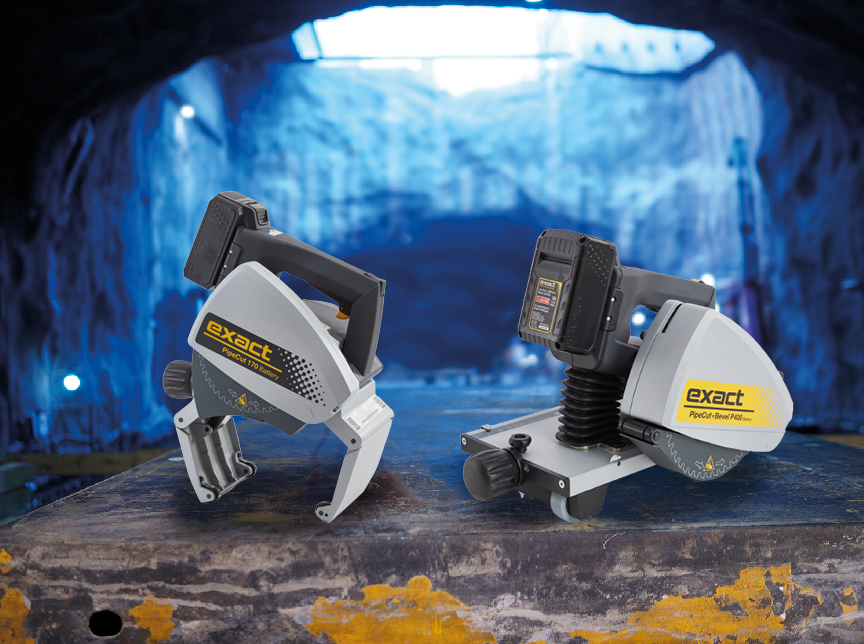
We specialise in revolutionary pipe cutting solutions that deliver cutting speeds up to 10 times faster than traditional methods. Our PipeCut series provides professional contractors with industrial pipe cutting technology designed for demanding field conditions. The lightweight, portable design enables easy on-site operation while maintaining exceptional safety standards through cold-cutting processes that eliminate fire hazards.
Our cutting technology handles diverse materials, including steel, plastic, copper, aluminium, cast iron, stainless steel, and multi-layer pipes. Precision cutting produces smooth, straight cuts ready for immediate joining, eliminating secondary operations that slow installation progress. Learn more about our comprehensive pipe cutting solutions and how they transform installation efficiency.
Featured Pipe Cutting Solutions
| Product | Pipe Materials | Pipe Diameter | Key Features |
|---|---|---|---|
| PipeCut P400 | PE, PP, PVC, plastic pipes | 50-400 mm | Cut and bevel in one process, 15-degree bevel capability |
| PipeBevel 220E | Steel, stainless steel | 25-220 mm | Portable beveller, multiple bevel angles, spark-free operation |
| PipeBevel 360E | Steel, stainless steel | 110-360 mm | Heavy-duty bevelling, built-in stopper, consistent results |
Professional contractors benefit from our 85% lower power consumption compared to angle grinders, reducing operating costs while improving productivity. Precision engineering delivers consistent results across varying field conditions, enabling reliable project timeline planning. Contact our team to discuss how our pipe cutting solutions can accelerate your specific installation projects and improve overall operational efficiency.