

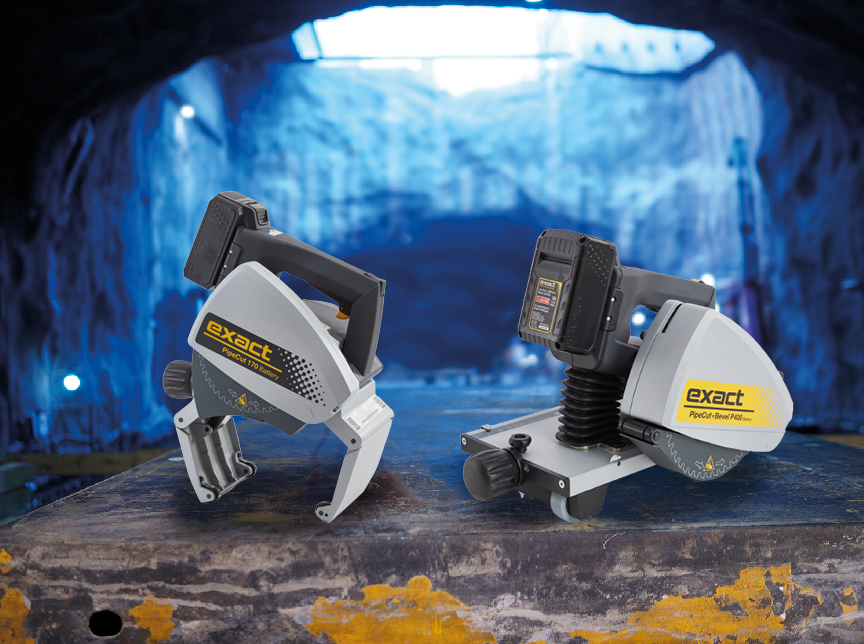
A portable pipe saw uses a motorised cutting system with a rotating blade to cut pipes cleanly and precisely. The machine clamps securely around the pipe and feeds the blade through the material in a controlled motion, creating straight, smooth cuts without sparks or heat. Modern portable pipe saws can cut various materials, including steel, plastic, copper, aluminium, and stainless steel, in diameters ranging from small residential sizes to large industrial applications.
What is a portable pipe saw and how does it differ from traditional cutting methods?
A portable pipe saw is a specialised pipe-cutting machine designed for on-site applications across various industries. These machines combine a motorised cutting system with a clamping mechanism that secures around the pipe, allowing precise, controlled cuts without the need for fixed workshop equipment.
The core components include a motor housing, a cutting blade assembly, a pipe clamping system, and a feed mechanism that guides the blade through the material. Unlike stationary pipe-cutting equipment, portable pipe saws are lightweight and designed for easy transport to job sites, making them ideal for field installations and repairs.
Traditional cutting methods, such as angle grinders, create significant heat and sparks and often require multiple passes to achieve clean cuts. Manual cutting tools, such as hacksaws, are labour-intensive and produce inconsistent results. Portable pipe saws use cold-cutting technology that eliminates fire hazards through spark-free operation while delivering cuts that are immediately ready for joining, without additional finishing work.
How does the cutting mechanism work in modern portable pipe saws?
The cutting mechanism operates through a precise blade-rotation system combined with a controlled feed mechanism that advances the blade through the pipe material. The process begins when the operator clamps the saw securely around the pipe, ensuring proper alignment and stability throughout the cutting operation.
Modern pipe-cutting technology employs a motorised system that rotates the blade at optimal speeds for different materials. The feed system automatically advances the blade through the pipe wall, maintaining consistent cutting pressure and speed. This controlled approach prevents blade binding, reduces operator fatigue, and ensures uniform cut quality.
Safety features include protective guards around the blade, emergency-stop mechanisms, and secure clamping systems that prevent pipe movement during operation. Step-by-step operation involves positioning the saw, securing the clamp, starting the motor, engaging the feed mechanism, and allowing the machine to complete the cut automatically. The entire process typically takes seconds rather than minutes compared with manual methods.
What materials can portable pipe saws cut and what are the size limitations?
Professional pipe-cutting tools can handle a comprehensive range of materials, including steel, plastic, copper, aluminium, cast iron, stainless steel, and multilayer pipe materials. The versatility of modern portable pipe saws makes them suitable for diverse applications across plumbing, construction, and industrial sectors.
Diameter ranges vary by machine model, with smaller units handling pipes from 25 mm to 220 mm, while larger industrial models accommodate pipes up to 400 mm or more. Wall-thickness capabilities typically extend up to 25 mm for most materials, though this varies based on the specific material type and machine specifications.
Material-specific considerations include blade selection, cutting speeds, and feed rates. Plastic pipes require different cutting parameters than steel pipes to prevent melting or chipping. Stainless steel demands specialised cutting tips due to its hardness, while multilayer pipes require careful handling to prevent delamination during the cutting process.
What are the key components that make portable pipe saws efficient and safe?
Essential components include robust motor systems that provide consistent power delivery, precision-engineered blade assemblies, and secure clamping mechanisms that ensure accurate positioning. These elements work together to deliver reliable performance across different pipe materials and site conditions.
Motor systems in quality pipe-cutting machines offer variable speed control and sufficient torque to handle demanding materials without stalling. Blade types vary according to application, with TCT (tungsten carbide-tipped) blades providing extended life and superior cut quality. Some cutting heads feature multiple cutting tips with rotating edges, significantly extending blade life.
Safety features encompass protective guards, emergency stops, and ergonomic designs that reduce operator strain. Portability features include lightweight construction, carrying cases, and battery-power options for remote locations. Modern machines demonstrate impressive power efficiency, consuming significantly less energy than traditional angle grinders while delivering superior results.
How do you operate a portable pipe saw safely and effectively?
Safe operation begins with proper setup procedures, including inspecting the machine, selecting appropriate blades, and ensuring adequate workspace clearance. Operators should wear appropriate personal protective equipment and verify that the pipe is properly supported before beginning any cutting operation.
Step-by-step operational procedures include:
- Position the saw around the pipe at the desired cutting location.
- Secure the clamping mechanism, ensuring proper alignment.
- Select the appropriate cutting speed for the material type.
- Start the motor and engage the feed mechanism.
- Monitor cutting progress and maintain steady operation.
- Complete the cut and allow the blade to stop before removing the saw.
Maintenance considerations include regular blade inspection, cleaning cutting debris, and lubricating moving parts according to manufacturer specifications. Troubleshooting common issues involves checking blade sharpness, verifying proper clamping, and ensuring an adequate power supply. Explore professional pipe cutting solutions to find the right equipment for your specific applications.
How does Exact Tools help professionals with pipe cutting?
We specialise in revolutionary pipe-cutting and finishing solutions, serving professionals across construction, plumbing, and industrial sectors worldwide. Our expertise spans more than twenty years of developing innovative pipe-cutting technology that delivers exceptional performance and reliability for demanding applications.
Our product range centres on the award-winning PipeCut series, offering portable pipe-cutting solutions that achieve cutting speeds up to 10 times faster than traditional methods. These machines cut through steel, plastic, copper, aluminium, cast iron, stainless steel, and multilayer pipes, producing precision cuts that are ready for immediate joining.
Featured PipeCut Solutions
| Model | Pipe Range | Materials | Key Features |
|---|---|---|---|
| PipeBevel 220E | 25–220 mm diameter | Steel, stainless steel | Bevelling capability, spark-free operation, wall thickness up to 10 mm |
| PipeBevel 360E | 110–360 mm diameter | Steel, stainless steel | Large-pipe capability, multiple bevel angles, portable design |
| PipeCut P400 | 50–400 mm diameter | PE, PP, PVC plastics | Cut and bevel in one process, 15-degree bevel capability |
We hold ISO 9001, ISO 14001, and ISO 45001 certifications, demonstrating our commitment to quality management, environmental responsibility, and occupational safety. Our solutions have received prestigious recognition, including Red Dot Design Awards and GOOD DESIGN Awards, reflecting our dedication to innovation and user-focused design.
Our cold-cutting technology eliminates fire hazards while consuming 85% less power than angle grinders, making our solutions both safer and more environmentally efficient. Whether you need precise cuts for welding preparation, bevelling for pipe joining, or high-volume production cutting, our comprehensive range addresses professional pipe-cutting challenges with proven reliability. Contact our team to discuss your specific pipe-cutting requirements and discover how our solutions can enhance your operational efficiency.