

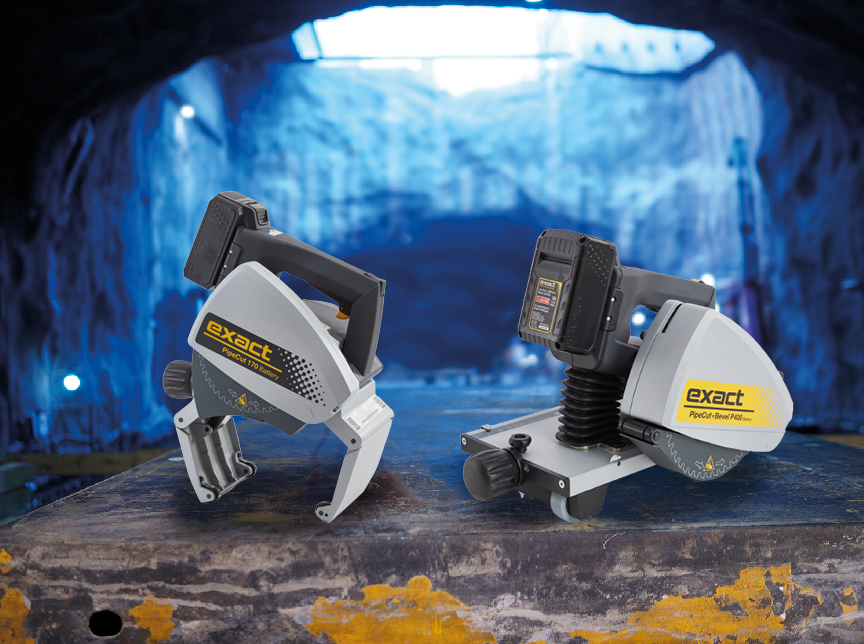
Pipe sawing is a specialised cutting method that uses rotating blades to create clean, precise cuts through a wide range of pipe materials. This industrial pipe-cutting technique uses controlled blade rotation and guided cutting mechanisms to deliver straight, smooth cuts that are ready for joining. Unlike traditional cutting methods such as angle grinders or manual hacksaws, pipe sawing offers significantly faster cutting speeds, enhanced safety through cold-cutting processes, and superior cut quality with minimal material waste.
Professional pipe-cutting equipment has revolutionised how contractors approach pipe installation and maintenance projects. Explore our comprehensive range of pipe-cutting solutions to discover how modern pipe sawing technology can transform your workflow efficiency.
What is pipe sawing and how does it differ from other cutting methods?
Pipe sawing employs a rotating blade mechanism that cuts through pipe materials using controlled circular motion. The cutting process relies on precisely engineered blades with specific tooth configurations that slice through material fibres rather than grinding or burning through them. This fundamental approach creates what professionals call “cold cutting” because it generates no heat, sparks, or flames during operation.
Traditional cutting methods present several limitations compared to modern pipe sawing techniques. Angle grinders, whilst widely available, create significant heat build-up that can damage pipe materials and pose fire hazards in sensitive environments. Manual hacksaws require substantial physical effort and time, often producing uneven cuts that need additional finishing. Reciprocating saws can deform pipes due to vibration and may struggle with thicker wall materials.
The superiority of pipe sawing becomes evident in several key areas:
- Speed efficiency: Professional pipe-cutting tools can achieve cutting speeds up to 10 times faster than conventional methods
- Safety enhancement: Cold-cutting eliminates fire risks and reduces operator exposure to sparks and hot debris
- Cut quality: Produces straight, clean cuts that require no additional finishing before joining
- Material preservation: Prevents heat damage to pipe coatings and internal structures
- Energy efficiency: Consumes significantly less power than grinding-based methods
How does the pipe cutting blade actually cut through different materials?
Pipe-cutting blades work through precisely designed tooth geometry that creates a shearing action against the pipe material. Each tooth removes small chips in sequence as the blade rotates, gradually penetrating the pipe wall. The cutting mechanism varies based on material properties, with harder materials requiring different tooth configurations and cutting speeds than softer materials.
Blade design incorporates several critical elements that determine cutting performance. Tooth pitch (the spacing between teeth) affects cutting speed and surface-finish quality. A smaller tooth pitch provides smoother cuts but slower cutting rates, whilst a larger pitch enables faster cutting through thicker materials. Tooth geometry, including rake angle and relief angle, optimises cutting efficiency for specific material types.
Different pipe materials require tailored blade approaches:
- Steel and stainless steel: Require carbide-tipped blades with aggressive tooth geometry to handle the material’s hardness
- Plastic materials (PVC, PE, PP): Benefit from fine-tooth blades that prevent cracking and melting
- Copper and aluminium: Need blades designed to prevent material build-up on the teeth
- Cast iron: Requires specialised tooth configurations to handle brittleness
- Multi-layer pipes: Demand blades capable of cutting through different material layers simultaneously
The cutting process maintains consistent blade contact pressure through mechanical guides and support systems. This controlled approach ensures uniform cutting action around the entire pipe circumference, preventing blade wander and angled cuts that could compromise joint integrity.
What are the key components that make pipe sawing work effectively?
Effective pipe sawing relies on four essential systems working together: the motor system, blade guidance mechanism, pipe clamping system, and cutting-head assembly. Each component provides specific functionality that ensures accurate, efficient cutting operations while maintaining operator safety and equipment longevity.
The motor system provides controlled rotational power to drive the cutting blade. Modern pipe-cutting equipment utilises variable-speed motors that allow operators to adjust cutting speeds based on material type and pipe diameter. Motor power ratings typically range from 1,200 to 2,000 watts, providing sufficient torque to cut through various pipe materials whilst maintaining consistent blade speed under load.
Blade guidance systems ensure cutting accuracy through several mechanisms:
- Precision bearings that maintain blade alignment during rotation
- Adjustable guides that accommodate different pipe diameters
- Depth-control mechanisms that prevent overcutting
- Vibration-dampening systems that reduce blade deflection
Pipe clamping mechanisms secure the workpiece during cutting operations. These systems typically feature adjustable jaws or chain-based clamps that adapt to various pipe diameters whilst preventing movement during cutting. Proper clamping reduces vibration, ensures cut accuracy, and enhances operator safety by keeping the pipe securely positioned.
The cutting-head assembly integrates blade mounting, cooling systems, and debris management. High-quality cutting heads incorporate features such as blade guards for safety, chip-evacuation systems to maintain cutting efficiency, and quick-change blade mounting for operational convenience. Integration between components ensures smooth operation, with electronic controls coordinating motor speed, feed rates, and safety systems.
How do you choose the right pipe cutting method for your project?
Selecting the appropriate pipe-cutting method requires evaluating project requirements against available cutting technologies. The decision framework considers pipe material properties, dimensional specifications, project scale, working-environment constraints, and quality requirements. Professional contractors typically assess these factors systematically to determine the optimal approach.
Material considerations form the primary selection criteria. Steel and stainless steel pipes generally require robust cutting equipment with carbide-tipped blades and sufficient motor power. Plastic pipes can be cut effectively with lighter equipment but require careful speed control to prevent melting. Multi-layer pipes present unique challenges and require specialised blade types capable of handling different material layers simultaneously.
Pipe dimensional specifications significantly influence equipment selection:
- Diameter range: Equipment must accommodate the full range of pipe sizes in your project
- Wall thickness: Thicker walls require more powerful equipment and appropriate blade selection
- Length considerations: Longer pipes may require additional support during cutting
- Quantity requirements: High-volume projects justify investment in faster, more efficient equipment
Working-environment factors affect equipment choice and method selection. Confined spaces may require compact, portable equipment rather than larger stationary systems. Fire-sensitive environments necessitate cold-cutting methods that eliminate spark generation. Noise-restricted areas benefit from quieter cutting technologies than traditional grinding methods.
Quality requirements determine acceptable cutting tolerances and surface-finish standards. Applications requiring precise cuts for welding or joining typically demand professional pipe-cutting equipment rather than manual methods. Projects with less stringent requirements may allow simpler approaches whilst still delivering acceptable results.
How does Exact Tools help professionals with pipe sawing?
We specialise in revolutionary pipe cutting and finishing solutions for professional contractors across the construction, plumbing, and industrial sectors worldwide. Our expertise spans more than two decades of developing cutting-edge pipe-cutting technology that delivers superior performance, safety, and efficiency compared to traditional cutting methods.
Our product portfolio addresses diverse professional pipe-cutting requirements through innovative design and engineering excellence. The PipeCut series is our flagship offering, providing portable pipe-cutting solutions that achieve cutting speeds up to 10 times faster than conventional methods whilst maintaining exceptional cut quality and safety standards.
We offer three exemplary products that demonstrate our comprehensive approach to pipe-cutting challenges:
PipeCut P400 System
| Pipe Materials: | PE, PP, PVC, and other plastic materials |
| Pipe Diameter: | 50 mm–400 mm (2″–16″) |
| Key Features: | Cut and bevel in one process; 15-degree bevel capability |
| Applications: | Plastic pipe installations requiring bevelled edges |
PipeBevel 220E System
| Pipe Materials: | Steel and stainless steel |
| Pipe Diameter: | 25 mm–220 mm (0.98″–8.6″) |
| Key Features: | Multiple bevel angles (30°, 37.5°, 45°); portable design |
| Applications: | On-site welding preparation and pipe joining |
PipeBevel 360E System
| Pipe Materials: | Steel and stainless steel |
| Pipe Diameter: | 110 mm–360 mm (4.33″–14.17″) |
| Key Features: | Large-diameter capacity, consistent bevelling results |
| Applications: | Industrial pipe systems and large-scale construction |
Our commitment to excellence extends beyond product development to comprehensive quality-management systems. We maintain ISO 9001, ISO 14001, and ISO 45001 certifications, demonstrating our dedication to quality management, environmental responsibility, and occupational safety. These certifications help ensure our products meet the highest international standards for professional industrial applications.
Recognition from prestigious international design competitions validates our innovative approach to pipe-cutting technology. Our products have received Red Dot Design Awards and GOOD DESIGN Awards, acknowledging design excellence and functional innovation that benefits professional users worldwide.
Professional contractors choose our solutions because they address real-world challenges through practical innovation. Our pipe-cutting equipment eliminates fire hazards through cold-cutting processes, reduces power consumption by up to 85% compared to angle grinders, and delivers consistently superior cut quality that reduces installation time and improves joint integrity.
Whether you’re handling routine maintenance, complex industrial installations, or large-scale construction projects, discover how our pipe-cutting solutions can enhance your operational efficiency and project outcomes. Contact our technical specialists to discuss your specific pipe-cutting requirements and find the optimal solution for your professional applications.