

Professional pipe-cutting projects demand efficiency and precision, yet traditional grinding methods continue to slow workflows across the construction and plumbing sectors. The time investment required for grinding pipes extends far beyond the actual cutting process, encompassing setup, material preparation, multiple finishing steps, and frequent equipment maintenance. Modern pipe saw technology offers a compelling alternative that can dramatically reduce project timelines.
Understanding the quantifiable time savings between pipe saws and grinding methods helps contractors make informed equipment decisions. Professional pipe-cutting efficiency directly impacts project profitability, labour costs, and client satisfaction. Explore advanced pipe-cutting solutions that deliver measurable productivity improvements across various pipe materials and sizes.
This analysis examines the specific factors contributing to time savings when switching from grinding to pipe saw technology, providing concrete data on cutting speeds, efficiency improvements, and real-world productivity gains that professionals can expect in their operations.
Why traditional grinding methods slow down pipe-cutting projects
Traditional grinding approaches create significant bottlenecks in pipe-cutting operations through multiple time-consuming requirements. The setup process alone demands considerable preparation time, including securing proper ventilation, establishing fire safety measures, and positioning protective barriers around the work area. These safety protocols, while necessary, can add 15–20 minutes to each cutting session before any actual work begins.
Grinding operations require frequent disc changes due to rapid wear when cutting through various pipe materials. A typical grinding disc may last only 10–15 cuts on steel pipes before requiring replacement, creating interruptions that compound over longer projects. Each disc change involves stopping work, allowing equipment to cool, removing worn discs, and installing fresh cutting wheels.
The cutting process itself generates substantial heat, sparks, and debris that necessitate additional finishing work. Ground pipe ends typically require secondary operations, including deburring, smoothing rough edges, and cleaning metal shavings from cut surfaces. These finishing steps can double the total time investment per cut, particularly when precision joints are required for professional installations.
Material waste represents another hidden time cost in grinding operations. The grinding process removes significantly more material than necessary, creating wider kerfs that may require additional fitting adjustments. Heat generation during grinding can also cause pipe distortion, leading to rework or replacement of damaged sections.
How pipe saws deliver 10x faster cutting speeds
Professional pipe saws achieve dramatically faster cutting speeds through precision-engineered blade technology and optimised cutting mechanics. Where traditional grinding might require 3–5 minutes per cut on a 100 mm steel pipe, modern pipe saws complete the same operation in 20–30 seconds. This represents genuine 10x speed improvements that translate directly into labour-hour savings.
The cutting efficiency stems from several technical advantages built into pipe saw design. Cold-cutting processes eliminate heat generation, allowing continuous operation without cooling periods between cuts. The controlled cutting motion produces clean, straight cuts that require minimal finishing work, eliminating the secondary operations typically needed after grinding.
Different pipe materials demonstrate varying levels of speed improvement when switching to pipe saw technology:
- Steel pipes: 8–12x faster cutting speeds compared to grinding
- Plastic pipes: 6–10x speed improvements with cleaner edge quality
- Copper and aluminium: 10–15x faster cuts with reduced material waste
- Stainless steel: 5–8x speed gains while maintaining precision tolerances
Pipe-cutting blade longevity contributes significantly to overall time savings. Quality pipe saw blades maintain cutting performance through hundreds of cuts before requiring replacement, compared to grinding discs that may need changing after every dozen cuts. This reliability reduces interruptions and maintains consistent cutting speeds throughout extended work sessions.
Real-world time savings: pipe-cutting efficiency breakdown
Construction projects involving extensive pipe installations demonstrate measurable productivity improvements when teams switch from grinding to pipe saw methods. A typical commercial plumbing installation requiring 200 pipe cuts can be completed in approximately 2–3 hours using pipe saws, compared to 15–20 hours with traditional grinding approaches.
The time savings compound across different project phases. Initial cutting operations show the most dramatic improvements, but reduced finishing requirements and fewer quality issues contribute additional efficiency gains. Projects report 60–75% reductions in total pipe preparation time when factoring in all associated tasks.
Labour-hour analysis reveals significant cost implications beyond simple cutting speed improvements. Reduced setup times, fewer disc changes, minimal finishing requirements, and decreased rework combine to create substantial labour savings. Teams can complete pipe-cutting tasks with fewer personnel while maintaining higher quality standards.
Project completion timelines benefit from improved workflow consistency. Pipe saw operations maintain steady productivity throughout work sessions, avoiding the slowdowns associated with frequent grinding disc changes and cooling periods. This consistency helps contractors meet tight project deadlines and improve client satisfaction.
Factors that maximise pipe-cutting time savings
Several key variables influence the magnitude of time savings achievable when switching to pipe saw technology. Pipe diameter plays a crucial role, with larger-diameter pipes showing more dramatic time improvements due to the increased cutting circumference. Wall thickness affects cutting speed, though pipe saws maintain relatively consistent performance across varying wall thicknesses compared to grinding methods.
Pipe material selection significantly impacts cutting efficiency and blade performance. Softer materials like plastic and copper allow for extremely fast cutting speeds, while harder materials such as stainless steel still provide substantial time savings over grinding approaches. Understanding material-specific cutting parameters helps optimise blade selection and cutting speeds.
Proper setup and operation techniques maximise time-saving potential:
- Blade selection: Match blade specifications to specific pipe materials and sizes
- Machine positioning: Ensure stable mounting to produce clean, accurate cuts
- Cutting parameters: Adjust feed rates and speeds for optimal performance
- Maintenance scheduling: Regular equipment care maintains peak cutting efficiency
Work environment factors also influence overall efficiency gains. Adequate workspace organisation, proper tool storage, and streamlined material handling contribute to maximising the time-saving potential of pipe saw technology. Teams that develop systematic approaches to pipe-cutting operations achieve the greatest productivity improvements.
How Exact Tools helps save time in pipe cutting
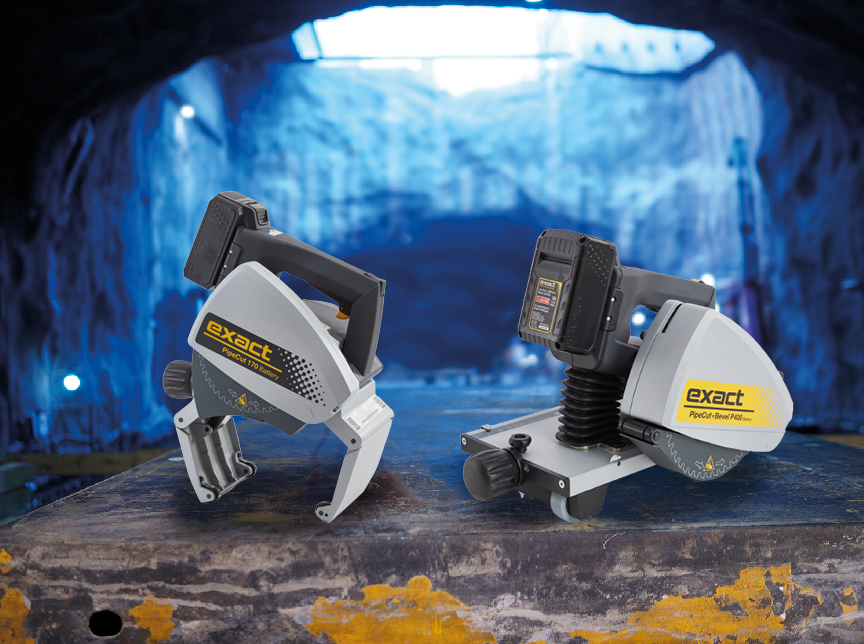
Exact Tools has developed comprehensive pipe-cutting solutions that address the specific time-efficiency challenges faced by professional contractors and industrial users. Our PipeCut series delivers the documented 10x faster cutting speeds through precision-engineered technology developed over more than two decades of specialisation in pipe cutting and finishing solutions.
We offer three distinct pipe-cutting systems designed for different operational requirements:
PipeCut P400 System
Materials: Plastic pipes (PE, PP, PVC)
Key features: Cut and bevel in one process, 15-degree bevel capability, lightweight at 6.0 kg
Pipe sizes: 25–220 mm diameter, up to 10 mm wall thickness
Time savings: Fast setup and consistent bevels reduce cycle times dramatically
PipeBevel 360E System
Materials: Steel and stainless steel pipes
Key features: Portable design for larger pipes, multiple cutting tips with four edges each
Time savings: Extended blade life and consistent performance on large-diameter pipes
Our cold-cutting technology eliminates fire hazards and spark generation while consuming 85% less power than traditional angle grinders. This approach not only saves time but also reduces safety setup requirements and eliminates cooling periods between cuts. The precision cutting process produces smooth, straight cuts that are ready for joining immediately, removing finishing steps that typically extend project timelines.
Professional contractors worldwide rely on our ISO 9001, ISO 14001, and ISO 45001-certified manufacturing processes to deliver consistent performance in demanding applications. Learn more about our complete pipe-cutting solutions and discover how our technology can transform your pipe-cutting efficiency. Contact our team to discuss your specific time-saving requirements and explore the most suitable pipe-cutting system for your operations.