

Professional pipe cutting forms the backbone of countless industrial operations, from construction sites to manufacturing facilities. Whether you’re working with steel, plastic, copper, or stainless steel pipes, understanding proper cutting techniques directly impacts project quality, safety, and efficiency. Modern pipe cutting methods have evolved significantly, offering faster speeds and superior precision compared to traditional approaches. Explore advanced pipe cutting solutions designed for professional applications. This comprehensive guide covers essential pipe cutting methods, tools, challenges, and solutions to help you make informed decisions for your projects.
What is pipe cutting, and why does it matter?
Pipe cutting is a fundamental industrial process involving the precise separation of cylindrical materials using specialised tools and techniques. This process differs significantly from general material cutting due to the unique challenges pipes present, including their hollow structure, varying wall thicknesses, and the critical need for clean, perpendicular cuts that ensure proper joining and sealing.
In the construction, plumbing, and manufacturing industries, pipe cutting serves as a critical foundation for system integrity. Poor cutting practices can lead to leaks, structural weaknesses, and costly repairs. Professional pipe cutting ensures that pipe ends are smooth, straight, and ready for immediate joining without additional finishing work.
Safety considerations in pipe cutting extend beyond basic tool operation. Different materials require specific approaches to prevent hazards such as sparks, toxic fumes, or structural damage. Cold cutting methods have gained prominence because they eliminate fire risks, particularly in environments where hot-work permits are difficult to obtain or where flammable materials are present.
Essential pipe cutting methods and techniques
Professional pipe cutting encompasses three primary methodological approaches, each suited to specific materials and operational requirements. Mechanical cutting methods utilise physical force through saw blades, pipe cutters, or shearing tools. These techniques excel with softer materials like plastic, copper, and thin-walled steel pipes, offering excellent control and clean finishes.
Thermal cutting techniques employ heat-based processes, including plasma cutting, oxy-fuel cutting, and laser cutting. These methods are particularly effective for thick-walled steel pipes and large-diameter applications. However, thermal methods generate heat-affected zones that may require additional finishing and present fire-safety considerations.
Cold cutting methods represent the most advanced approach, utilising specialised pipe saws that cut through materials without generating heat, sparks, or flames. This technique offers superior safety, reduced power consumption, and eliminates the need for hot-work permits. Cold cutting is especially valuable in occupied buildings, chemical facilities, and areas with strict safety requirements.
Pipe cutting tools: from basic to professional-grade
Basic pipe cutting tools include manual pipe cutters, hacksaws, and reciprocating saws. These tools work well for occasional use and smaller-diameter pipes but often struggle with precision, speed, and material versatility. Manual tools typically require significant physical effort and may produce inconsistent results between operators.
Professional-grade pipe cutting tools include advanced pipe saws, band saws, and specialised cutting machines. These tools offer consistent performance, faster cutting speeds, and superior cut quality. Professional tools often feature adjustable cutting parameters, multiple blade options, and ergonomic designs that reduce operator fatigue.
Tool selection criteria should include material compatibility, pipe diameter range, portability requirements, and safety features. Professional contractors benefit from tools that offer versatility across multiple pipe materials, rapid setup times, and consistent results regardless of operator skill level. Power consumption, maintenance requirements, and blade availability also influence long-term operating costs.
Common pipe cutting challenges and solutions
Material-specific challenges frequently arise when working with different pipe types. Steel pipes may require robust cutting forces and appropriate blade selection to prevent premature wear. Plastic pipes can crack or deform under excessive heat or improper clamping. Stainless steel presents unique challenges due to its hardness and tendency to work-harden during cutting.
Precision requirements in professional applications demand consistent, perpendicular cuts with minimal burr formation. Achieving these standards requires proper tool maintenance, appropriate cutting speeds, and secure pipe support systems. Pipe cutting techniques must account for pipe movement, vibration, and material deformation during the cutting process.
Safety concerns include fire hazards from spark-generating methods, noise exposure, and potential injuries from manual handling. Solutions include implementing cold cutting processes, using appropriate personal protective equipment, and establishing proper work-area controls. Regular tool maintenance and operator training significantly reduce safety risks while improving cut quality.
How Exact Tools revolutionizes professional pipe cutting
We have developed innovative pipe cutting solutions that address the most pressing challenges in professional pipe cutting applications. Founded in 1993 and established as Exact Tools Oy in 2001, our Finnish company has become a global leader in professional pipe cutting technology, serving tens of thousands of users worldwide across construction, plumbing, and industrial sectors.
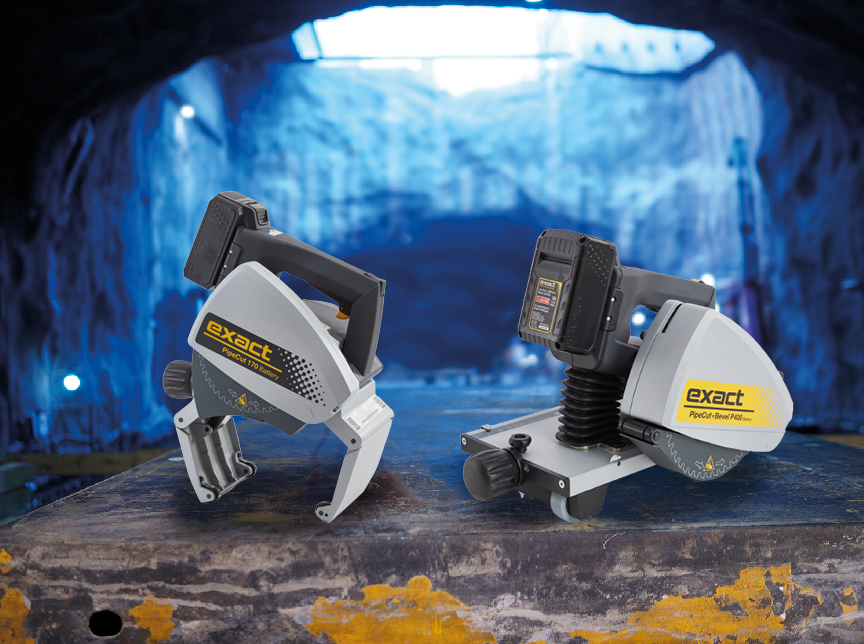
Our flagship PipeCut series delivers cutting speeds up to 10 times faster than traditional methods while maintaining exceptional precision and safety standards. These portable pipe saws cut through steel, plastic, copper, aluminium, cast iron, stainless steel, and multi-layer pipes with smooth, straight cuts ready for immediate joining. The cold cutting process eliminates sparks and significantly reduces fire hazards.
Professional Pipe Cutting Solutions Comparison
| Product | Pipe Diameter Range | Materials | Key Features |
|---|---|---|---|
| PipeCut P400 | 50-400 mm (2-16″) | PE, PP, PVC plastics | Cut and bevel in one process, 15° bevel capability |
| PipeBevel 220E | 25-220 mm (0.98-8.6″) | Steel, stainless steel | Multiple bevel angles (30°, 37.5°, 45°), portable design |
| PipeBevel 360E | 110-360 mm (4.33-14.17″) | Steel, stainless steel | Large-diameter capability, built-in stopper feature |
Our commitment to quality and innovation has earned multiple prestigious recognitions, including the Red Dot Design Award and the GOOD DESIGN Award. We maintain ISO 9001, ISO 14001, and ISO 45001 certifications, demonstrating our dedication to quality management, environmental responsibility, and occupational safety. Learn more about our complete range of professional pipe cutting solutions.
Professional contractors benefit from our technology’s 85% lower power consumption compared to angle grinders and the elimination of hot-work permit requirements through spark-free operation. Contact our team to discuss how our innovative pipe cutting solutions can enhance your project efficiency and safety standards.