

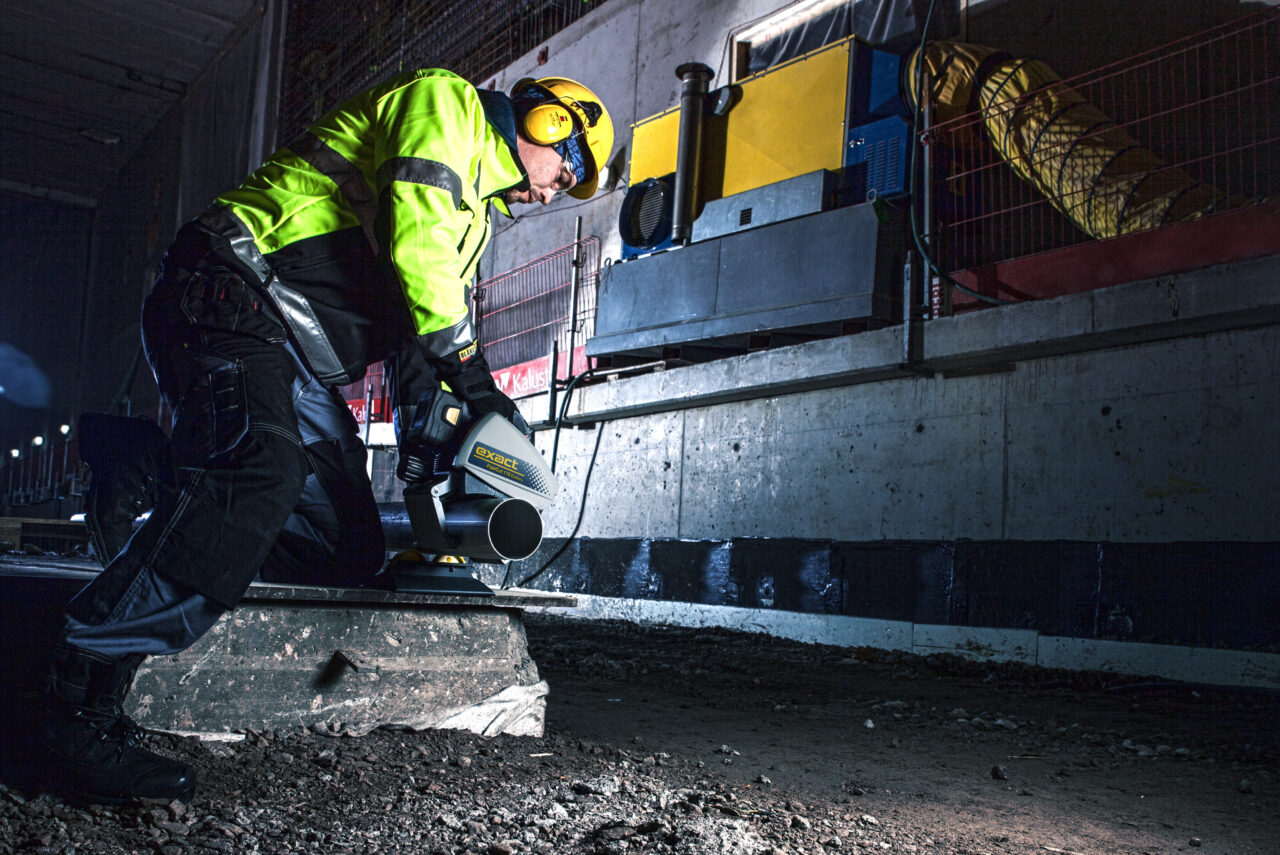
You are on a job site. There is no power outlet within reach. Or there is, but running a cable through three floors of an occupied building is not worth the hassle. A battery pipe saw solves that problem. A corded machine solves a different one. Choosing the wrong format costs you time, battery charge, or a tripped cable. For our complete pipe saw model comparison, the format decision is the first question to settle.
This article walks through two model pairs: the PipeCut 170E against the PipeCut 170 battery, and the PipeCut P400E against the PipeCut P400 battery. Both pairs use the same cold-cutting principle: no sparks, no flame, clean square ends ready for joining. The difference is where and how you power them. This is a corded vs cordless pipe saw comparison built for the buyer who needs a clear answer, not a list of maybes.
Site conditions that decide the choice
Power availability is the first filter. If your site has a stable 230 V supply within a sensible cable run, a corded machine is simpler to manage. If you are working in a trench, on a roof deck, in a building before the electrical fit-out is energised, or anywhere a pipe saw without power supply access is the daily reality, the battery format removes the constraint entirely.
The second filter is volume. A corded machine runs continuously without state management. A battery machine requires you to track charge level, carry spares, and plan around recharging. For occasional cuts in awkward locations, that trade-off is straightforward. For a full shift of high-volume cutting, it needs more planning.
PipeCut 170E vs PipeCut 170 battery
Both machines cut small-diameter pipes in the Classics range. The corded 170E draws from the mains; the PipeCut 170 battery runs on an 18 V battery system. The table below uses only figures published on the respective product pages. Where a spec is not published for a model, the cell is left blank rather than estimated. See how the two Classics machines compare across different pipe size ranges before deciding which model to specify.
- Pipe OD range: 170E: 10 to 170 mm (3/8 to 6 5/8 in) | 170 battery: 10 to 170 mm (3/8 to 6 5/8 in)
- Pipe materials: 170E: steel, stainless steel, copper, aluminium, plastic, multi-layer | 170 battery: steel, stainless steel, copper, aluminium, plastic, multi-layer
- Power source: 170E: 230 V mains | 170 battery: 18 V battery (battery sold separately)
- Blade diameters: 170E: 150 mm (5 7/8 in) | 170 battery: 150 mm (5 7/8 in)
- Weight: 170E: 4.1 kg (9.0 lb) | 170 battery: 4.6 kg (10.1 lb) including battery
- Choose this when: 170E: you have reliable mains power and cut frequently | 170 battery: you cut occasionally in locations without easy power access
The 170 battery is described on its product page as a lightweight battery-powered pipe saw suited to occasional use. If your workflow involves high-frequency cutting at a fixed workshop or powered site, the 170E is the lower-friction choice.
PipeCut P400E vs PipeCut P400 battery
The P400 pair handles large-diameter plastic and ventilation pipes. The plastic and ventilation saws category covers both models. The P400 battery is described on its product page as a cordless solution for cutting and beveling plastic pipes up to 400 mm (15 3/4 in) OD, which is a meaningful capability in HVAC, drainage, and industrial plastic pipework. For a broader view of available options, explore the wider plastic and ventilation range to find the model that fits your diameter requirements.
- Pipe OD range: P400E: up to 400 mm (15 3/4 in) | P400 battery: up to 400 mm (15 3/4 in)
- Pipe materials: P400E: plastic pipes | P400 battery: plastic pipes
- Power source: P400E: 230 V mains | P400 battery: 18 V battery (battery sold separately)
- Choose this when: P400E: you need continuous cutting capacity on a powered site | P400 battery: you need a cordless pipe cutting machine for large plastic pipes in locations without power
Both models also bevel, which matters when you are preparing pipe ends for solvent-weld or push-fit joints. The cordless format means you can bring the saw to the pipe rather than routing a cable across a large plant floor or roof installation.
What the battery model gives you
Freedom of placement is the headline benefit. You position the machine where the pipe is, not where the cable reaches.
- No trailing cable across walkways, stairwells, or trenches
- No risk of cable damage in rough terrain or confined spaces
- Faster setup when you are moving between cut points on a large site
- Quieter site safety profile with no cable trip hazard for other trades
- Same cold-cutting process: no sparks, no heat, no fire risk, regardless of power source
What you give up with the battery model
Battery management is real work. Ignoring it leads to a dead machine mid-shift.
- You must track charge state across the working day and plan recharging windows
- High-volume cutting requires spare batteries on site; a single battery may not cover a full shift depending on pipe material, wall thickness, and blade condition
- Cold weather reduces usable battery capacity, a well-documented characteristic of lithium-ion cells; in winter site conditions, carry batteries warm and monitor discharge rate
- The corded machine has none of this overhead: plug in, cut, continue
- Battery and charger are separate purchases if not included in your package
Runtime, cuts per charge, and charge time are not published on the product pages. If those figures are critical to your shift planning, contact a distributor directly with your pipe material and wall thickness details.
Batteries, charging, and shift planning
Both battery models use the 18 V platform. The 18 V battery charger supports the system. Beyond that, published charging data is limited, and we will not guess at figures that are not on the product page.
Practical shift planning for battery users:
- Identify your cut volume before the shift and decide how many batteries you need on site
- Charge overnight so you start with full capacity
- In cold conditions, store batteries in a heated vehicle or site cabin until use
- For high-volume days, the corded model is the lower-risk choice
Five situations where the battery is the right choice
- New-build before power is energised. The electrical installation is not yet commissioned. A cordless pipe cutting machine lets your pipework team work in parallel with other trades without waiting for temporary power supplies.
- Trench and excavation work. Running a mains cable into a trench introduces cable damage risk and trip hazards. A battery pipe saw keeps the work zone cleaner and safer.
- Renovation in occupied buildings. Trailing cables through corridors, across stairwells, and past the public creates liability and disruption. Cordless eliminates the cable run entirely.
- Remote and rural infrastructure. Water treatment sites, agricultural facilities, and rural pipeline projects may have no convenient power source. A pipe saw without power supply dependency keeps the job moving.
- Roof and plant deck work. Carrying a corded machine to height means managing a cable at elevation, including duct work where cable access is awkward. Battery operation simplifies the setup and removes one variable from a higher-risk work environment.
The two-machine solution: corded and battery side by side
Many contractors do not choose between formats. They stock both.
A corded machine handles the bulk of workshop prep and powered-site cutting. A battery machine handles the awkward locations, the early-phase new builds, and the remote callouts. The Classics line and the plastic and ventilation range both offer this pairing, which means your crew can share blades and technique across both formats.
The incremental cost of adding the battery format to an existing corded setup is lower than it might appear, because the cutting knowledge, the blade stock, and the technique transfer directly. Check the accessories range to confirm blade compatibility across your models.
Recommendation: which one fits your work
Choose the corded model if: you cut frequently on sites with reliable power, your volume is high enough that battery management would slow you down, or you work from a fixed workshop or fabrication bay.
Choose the battery model if: your sites regularly lack accessible power, you move between many cut points per shift, you work in occupied buildings or at height, or you need occasional cutting capacity in remote locations.
If you are genuinely split, the two-machine approach is the answer most experienced contractors land on. Start with the format that matches your most common job type, and add the other when the workflow demands it.
Check availability with Exact Tools
We sell through a distributor network, so the right next step is to confirm stock and configuration with your local distributor. You can check availability with your distributor directly from our website.
If you have questions about which model suits your pipe material, cut volume, or site conditions, our support team is here to help. Reach out through the contact form for product questions, technical queries, or anything else you need before you commit.