

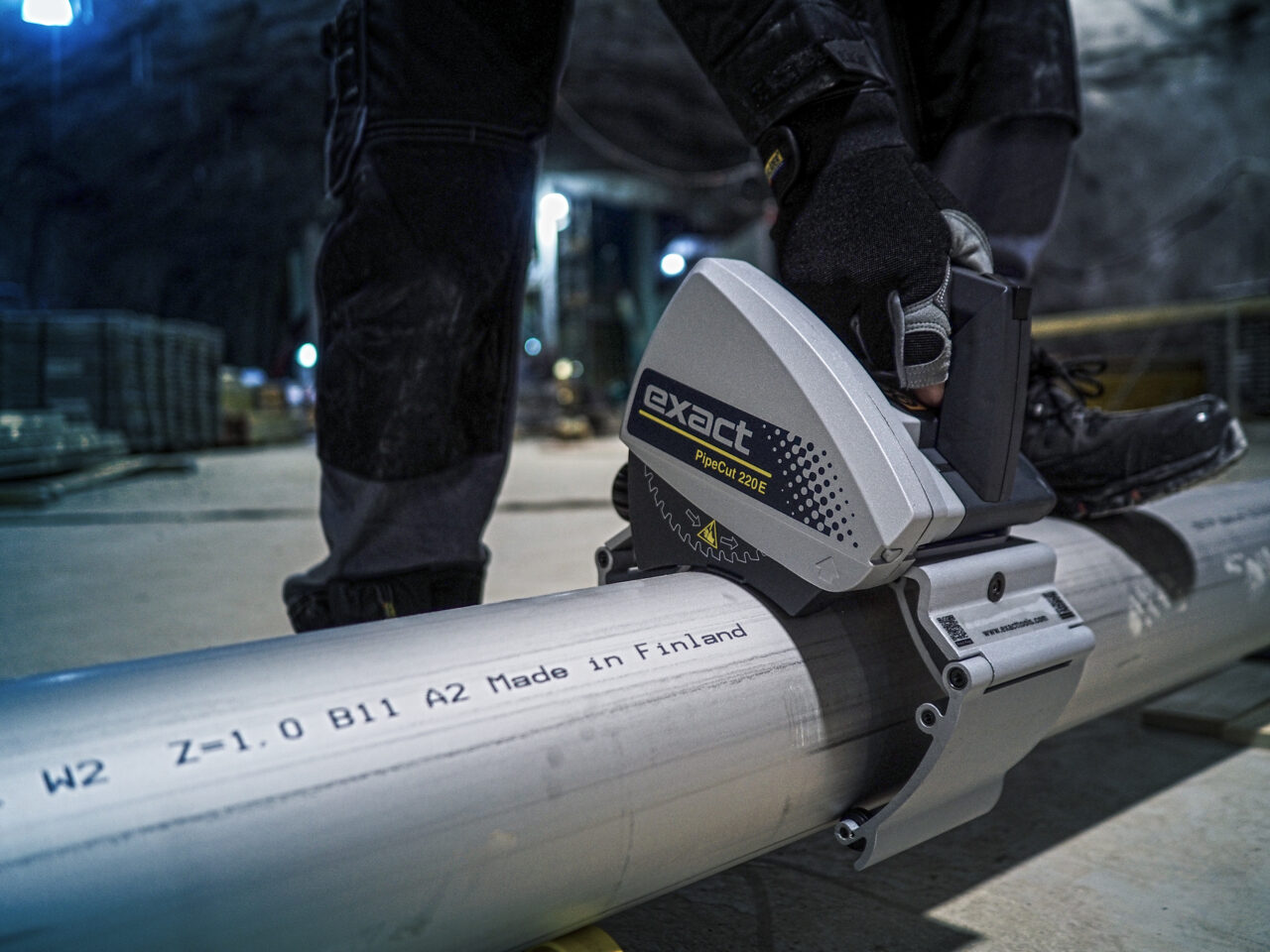
A pipe saw blade is a consumable, but how long it lasts depends far more on how you run it than on what it costs. The common causes of short blade life are the wrong blade for the material, a forced feed and poor pipe support. All three are fixable on site, and fixing them lowers your blade cost per job and cuts the stoppages that come from chipped teeth, burnt cuts and unplanned replacements.
This guide walks through each habit in the order you meet it at the pipe: matching blade and speed to the material, controlling feed, supporting the work, setting depth, keeping heat down, fitting a new blade and reading the signs of wear. If you are still sorting out which blade belongs on your machine, browse the full range of blades and discs alongside this guide. Everything here assumes you already have the right blade fitted and want to get the most cuts out of it.
Matching the Blade and Speed to the Pipe Material
Start every job by confirming that the blade type suits the pipe, then set the machine speed for that material. Blade selection has its own guide, so here is the short version: stainless steel needs a dedicated INOX blade, and diamond discs are the choice for cast iron and glass fibre. Running a general-purpose blade on the wrong material is one of the fastest ways to shorten blade life.

For a full comparison, see our blade selection guide. For specific material questions, these guides go deeper:
- Choosing between the 140 mm options: TCT 140, Cermet 140 and Cermet 140 THIN
- Cast and ductile iron: the best machine and disc for cast iron
- Stainless and acid-resistant pipe: the right pipe saw setup for stainless
- Plastic pipe: which machine and blade for HDPE, PE, PP and PVC
Then set the speed. On the PipeCut 220E and PipeCut 170E, the speed range is 1600 to 3500 rpm, with preset 4 for stainless and acid-resistant steel, preset 5 for steel and preset 6 for all other materials. On the PipeCut 360 Pro Series and the PipeCut Infinity, you preselect a low speed of 1900 rpm or a high speed of 2900 rpm.

Check before you cut: the blade diameter and type match your machine, the blade suits the material in front of you, and the speed is set for that material. If any answer is no, stop and correct it before the first cut.
Dialing In the Right Feed Rate
Let the blade do the cutting. Feed rate is the habit that most separates a long blade life from a short one, because a forced feed overloads the teeth, heats the blade and adds strain to the machine.
Follow this routine for each cut:
- Set the speed for the material before the blade touches the pipe.
- Bring the blade into the pipe gently and let it start to bite on its own.
- Apply steady, even pressure. Do not lean on the handle or jam the blade in.
- Listen to the motor. If the sound drops or strains, ease the pressure rather than pushing harder.
- Ease off slightly as the blade completes the final section so the teeth do not catch.
The larger machines help you here. The PipeCut 360 Pro Series and Infinity have soft start, overload protection and torque control, which protect the machine when the load gets too high.
The check: you should see a steady cut with an even sound, and the machine should never feel like it is fighting you. If it does, the feed is too aggressive.
When the Blade Choice Is the Real Problem
If you cut a mix of materials and wall thicknesses and keep getting poor results, revisit the blade choice rather than pushing the current blade harder. Each blade in the range is built for a family of materials, and using it as intended is part of getting full life from it.
Some blades come in two versions. Cermet 140 and Cermet 140 THIN, and INOX 140 and INOX 140 Thin, are examples, and our comparison of TCT 140, Cermet 140 and Cermet 140 THIN explains where each one fits. Some blades are machine-specific: the Cermet V155 is for use only with the PipeCut V800E. Our blade selection guide covers how to match the range to your work.
Supporting Pipe to Prevent Blade Damage
Support the pipe on both sides of the cut so it cannot sag, pinch or shift as the blade breaks through. Poor pipe support is one of the three main causes of short blade life, and it is also the easiest to fix before you start.
An unsupported pipe tends to close up on the blade as the cut deepens, or drop at the moment the wall is severed. Either one grabs the teeth, and a hard grab can chip a blade that would otherwise have served for a long time. Our guide on choosing pipe supports for portable pipe cutting covers the options in detail.
- Mark the cut line and place supports close to it on both sides, leaving the blade path clear.
- Check that the pipe cannot roll, slide or sag once the cut is under way.
- For long or heavy sections, support the offcut end so its weight does not pull the kerf shut or break away early.
- Keep your hands out of the blade path.
The check: once the cut is nearly through, the kerf stays open and the pipe stays put. If the pipe moves at any point, add support before the next cut.
Setting the Cutting Depth to the Wall
Blade depth adjustment is standard on the PipeCut 360 Pro Series, PipeCut Infinity and PipeCut HYDRA 360. Setting the depth to suit the wall you are cutting means the blade reaches as deep as the job needs and no deeper.
Check the depth whenever you change pipe size or wall thickness, and follow the operating instructions for your machine when you adjust it.
Keeping Heat Under Control
Heat quietly shortens a blade’s useful life. The right feed and speed are your first and best form of heat control. A blade that is forced, or run at the wrong setting for the material, heats up fast and wears faster. A blade that cuts freely produces structured chips instead of grinding the material.
- Do not dwell in the cut. Keep the blade moving through the material at a steady pace.
- Pause between a long run of cuts if the blade or pipe feels hot, rather than pushing on.
- Keep the blade and flanges clean so debris does not build up around the mounting area.
The check: the blade comes out of the cut without discoloration or a burnt smell. If you see either, review speed and feed before the next job.
Fitting and Starting a New Blade
A blade that sits slightly off or on dirty flanges will wobble and wear unevenly from the first cut, so mount every new blade carefully. Our guide on replacing pipe saw blades safely walks through the full procedure.
- Disconnect the power and clean the flanges and mounting area before fitting the new blade.
- Confirm that the blade diameter and type match the machine, and check the rotation direction.
- Run the machine briefly before cutting to confirm the blade runs true without vibration.
- Make the first cuts on a well-supported pipe with a steady, moderate feed.
The check: the new blade runs smoothly, and the first cuts come out clean and square.
Reading Blade Wear in the Chips
Look at the chips and the cut, not only the blade, because the waste material shows how the blade is performing. Our technical report on steel chips gives a clear picture of this. The test used a PipeCut 220E with a Cermet 140 blade on structural steel pipe measuring 168.3 mm by 4.5 mm, under identical conditions for the new and the worn blade.
- A new blade produces structured chips. The blade is cutting.
- A worn blade produces fine, fragmented particles. The blade has shifted from cutting to grinding.
The report recommends that you monitor chip size and shape, watch for early fragmentation, and replace the blade before the chips turn into fine dust. You can read the full findings in our technical report on visual analysis of steel chips.
Make it a habit. Glance at the chips after each cut and compare them with how they looked when the blade was new. Structured, consistent chips mean the blade is still healthy. Finer, more powdery chips are your early warning.
Knowing When to Change the Blade
Change the blade when chip quality drops, not only when a cut count says so. The report recommends basing replacement on chip quality as well as cut count, because that catches wear a simple tally misses.
Running a blade to full wear adds hidden costs: wear on the gearing and blade flanges, lower productivity and possible downtime.
- Chips are turning from structured pieces to fine, fragmented dust.
- The cut takes longer than it used to at the same feed.
- The machine strains or the motor sound changes under normal load.
- The cut surface looks rough or burnt where it was clean before.
When you decide to swap, follow our guide to replacing pipe saw blades safely. After the swap, the chips should return to structured pieces and the cut time should drop back to normal.
Blade Care Habits That Add Up
Small handling habits protect blades between jobs, and they cost nothing. Blade damage outside the cut often happens in a toolbox or van, so a few simple rules go a long way.
- Protect the teeth. Never let a blade knock against metal or other blades.
- Keep blades dry, and store them away from damp conditions.
- Store blades separately from loose tools so nothing chips or bends them.
- Carry spares in their packaging until you need them.
Having the right number of spares on hand means you can swap at the first sign of wear instead of nursing a tired blade to the end of the job. Our guide on how many pipe saw blades to take to site helps you plan that.
Put together, these habits lower your blade cost over a season: the right blade, the right speed, a steady feed, solid support, the right depth, a quick look at the chips and careful storage.
Frequently Asked Questions About Pipe Saw Blade Life
How do I know a pipe saw blade is worn?
Check the chips first. A new blade makes structured chips, while a worn one makes fine, fragmented particles because it is grinding instead of cutting. Other signs include slower cuts, a strained motor and rough or burnt cut surfaces. Replace the blade before the chips turn into fine dust.
Can one blade cut every pipe material?
No. Each blade is built for certain materials. Stainless steel needs a dedicated INOX blade, and diamond discs are the choice for cast iron and glass fibre. Plastic, aluminium and steel each have their own options in the range. Using the wrong blade is a leading cause of short blade life.
Which speed setting is used for stainless steel on the PipeCut 170E and 220E?
Preset 4 is for stainless and acid-resistant steel on the PipeCut 170E and 220E. The machines run from 1600 to 3500 rpm, with preset 5 for steel and preset 6 for all other materials. Pair preset 4 with an INOX blade for stainless work.
How many spare blades should a crew take to site?
It depends on the job, the pipe material and how many machines are running. Take enough that you can change at the first sign of wear without stopping work. Our guide on how many pipe saw blades to take to site explains how to plan it.
Order the Right Blade From Exact Tools
Before you order, confirm that the blade diameter and type match your machine and your pipe material. A blade that fits the machine and suits the job is the starting point for everything in this guide. The Cermet V155, for example, is for use only with the PipeCut V800E, so it pays to check compatibility every time.
If you are unsure, we are happy to help. Send us your machine model, the pipe material and the wall thickness through our contact page, and we will point you to the right blade. You can also order through a local dealer from our distributors page, and browse the full range of Exact Tools blades and discs at any time.